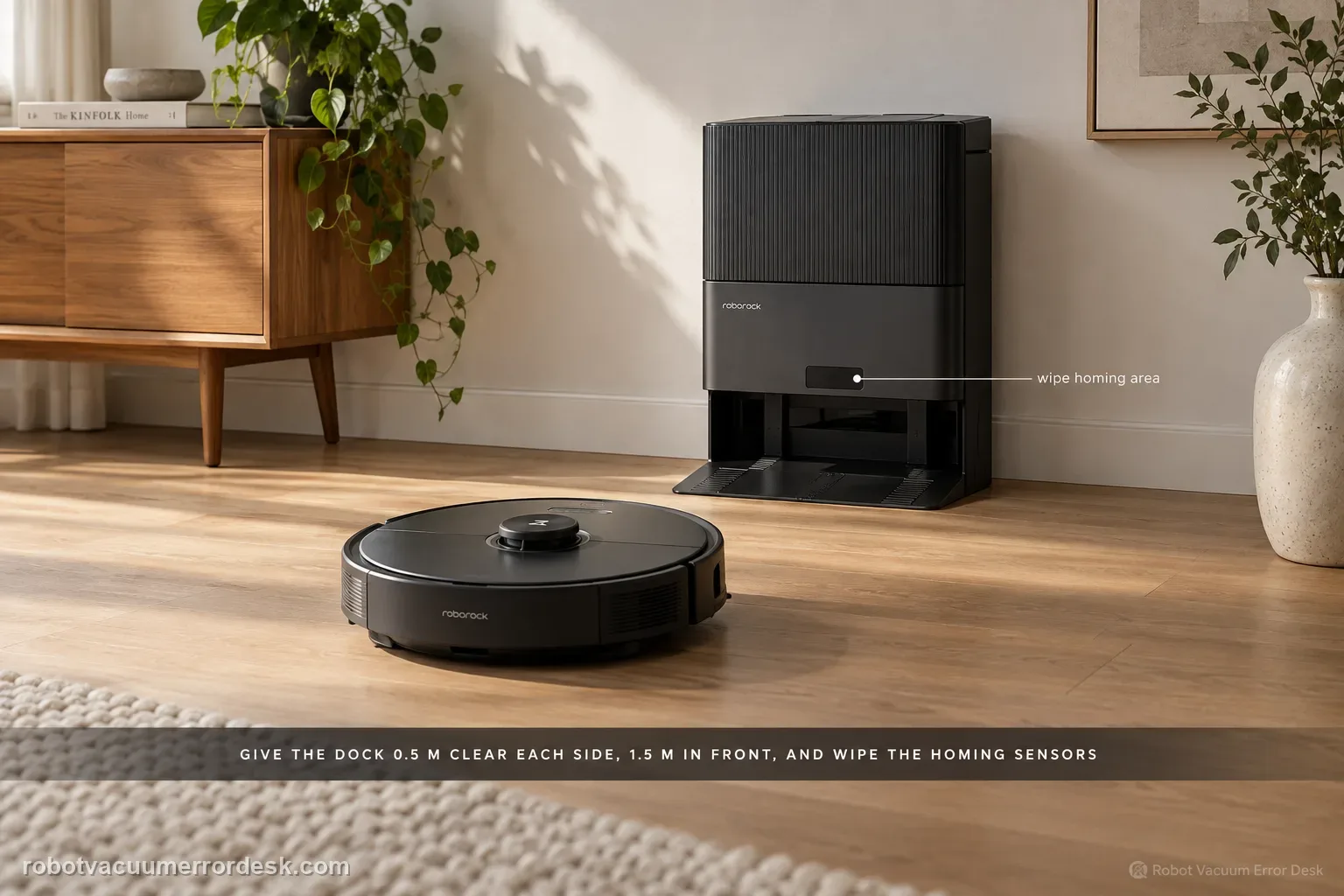
For a Qrevo that cannot find its RockDock, separate navigation from station functions. Roborock’s support says return can fail after manual relocation, a different start point, obstacles, poor dock clearance or dirty homing surfaces. Keep the station against a wall with about 20 inches (50 cm) to either side and 59 inches (1.5 m) in front, clean the dock signal area and robot front sensor, then compare a near return with an automatic return after a real cleaning task. Do not treat a charging or mop-wash fault as the same problem once the robot has actually reached the dock.
Confirm the exact model and exact code, light pattern or symptom.
Run the lowest-risk physical or software check first.
Use each pass condition to decide what the result actually narrows down.
Is this the problem you’re seeing?
- The Qrevo wanders instead of returning to the dock.
- It can charge when manually placed on the dock.
- The failure began after the robot or dock was moved.
Likely root causes, ranked
Qrevo was picked up or started from a location inconsistent with its map
RockDock was moved or approach space became obstructed
Dock front homing/signal area is dusty
Robot front sensor is dirty or blocked
Map/localization relationship is wrong when near-range station finding still works
What the result narrows down
| What you observe | What it narrows down | Next move |
|---|---|---|
| Qrevo never turns toward the RockDock | Localization or dock visibility is the active branch. | Check movement history, clearance and the two homing surfaces. |
| Qrevo finds dock from nearby but not after a room clean | Final homing works; map/path context is more suspect. | Run from the stationary dock without carrying and review map state. |
| Robot reaches dock but does not charge | The station was successfully found. | Switch to Qrevo Error 13/charging diagnostics. |
| Robot reaches dock but wash/empty does not run | Return navigation succeeded; a station-function trigger or hardware path remains. | Use the specific wash or auto-empty troubleshooting page. |
| Near and long return both fail after physical checks | Basic user-level homing conditions are exhausted. | Capture a video and map screenshot for Roborock support. |
Do not factory-reset by default. Use the exact model’s reboot/network-reset procedure only when the manufacturer path calls for it.
Checks to run, in sequence
Define whether the Qrevo is failing to locate or failing after arrival
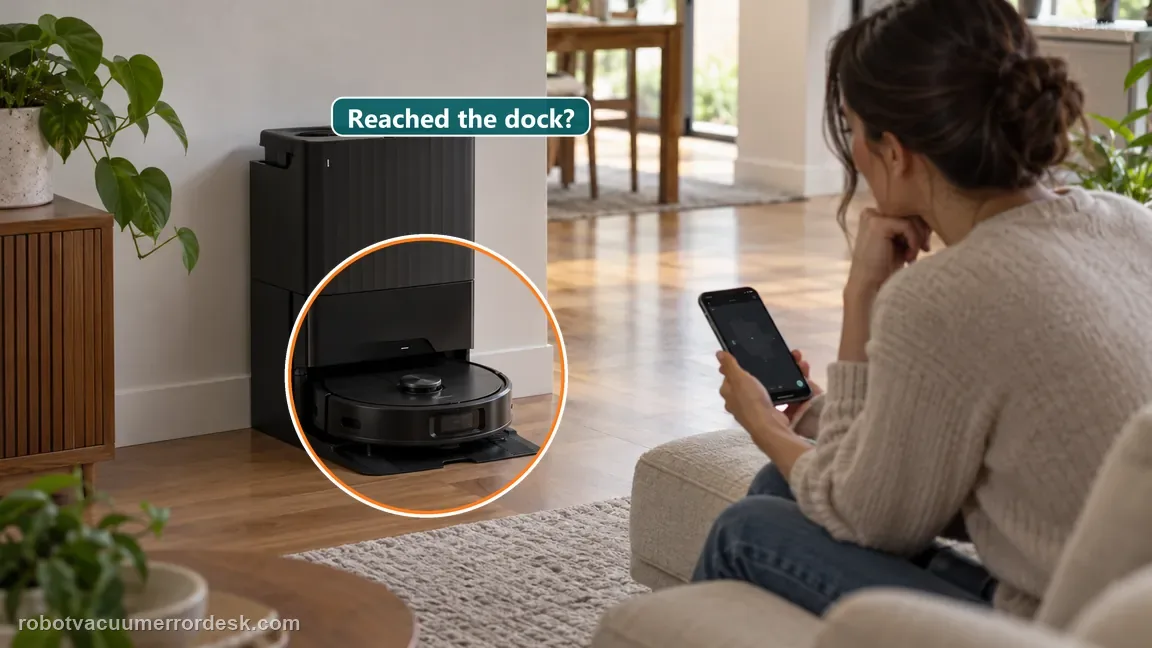
Watch a return attempt before changing settings. If the robot never heads correctly toward the RockDock, this is a locating/localization branch. If it reaches and seats but does not charge, empty or wash, the station has been found and you should use the specific charging or dock-function guide instead.
Undo manual relocation as a diagnostic variable
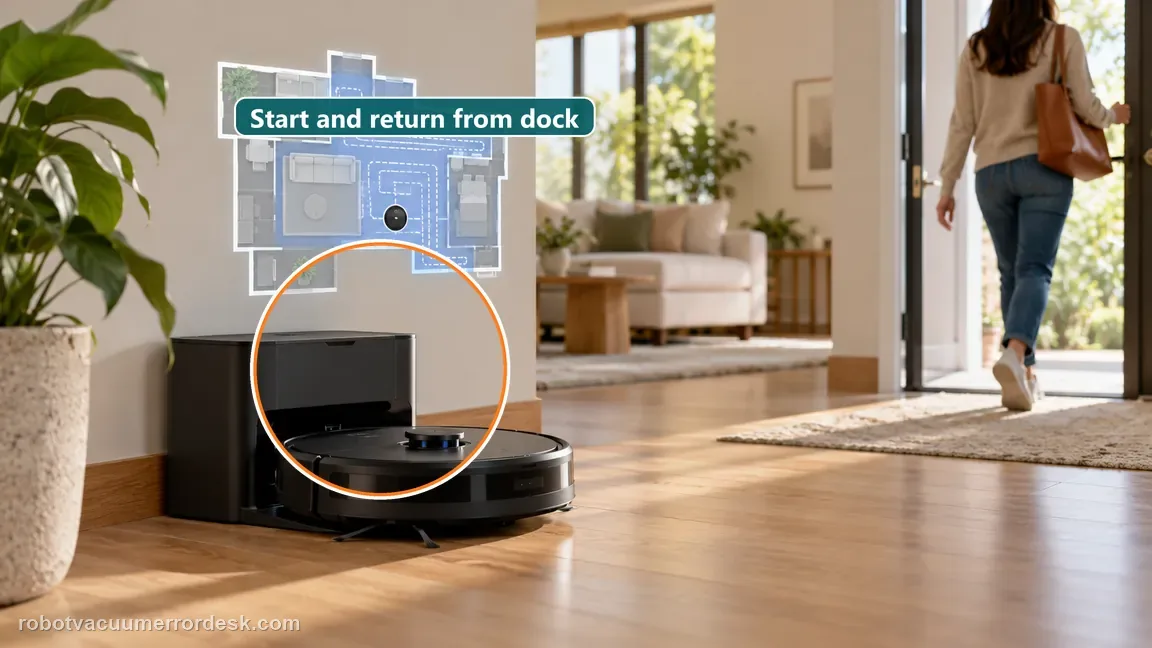
Roborock notes that a robot may have return trouble if it was started elsewhere or moved manually. For the next test, begin on the same mapped floor without carrying the Qrevo after it localizes. If possible, launch a short cleaning task from the RockDock itself.
Give the larger RockDock a clean approach zone
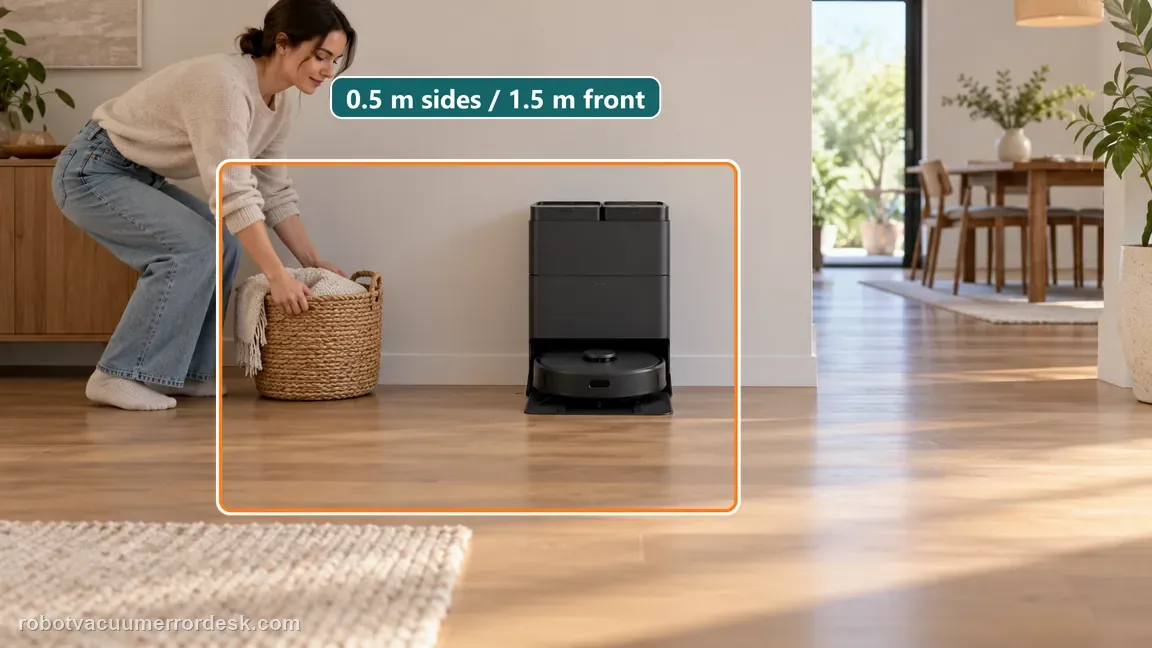
Set the dock against a wall with about 20 inches open to either side and 59 inches ahead, matching Roborock’s published return guidance. Remove bins, cords and furniture edges that force the robot into an awkward last turn. Keep the station fixed after this correction.
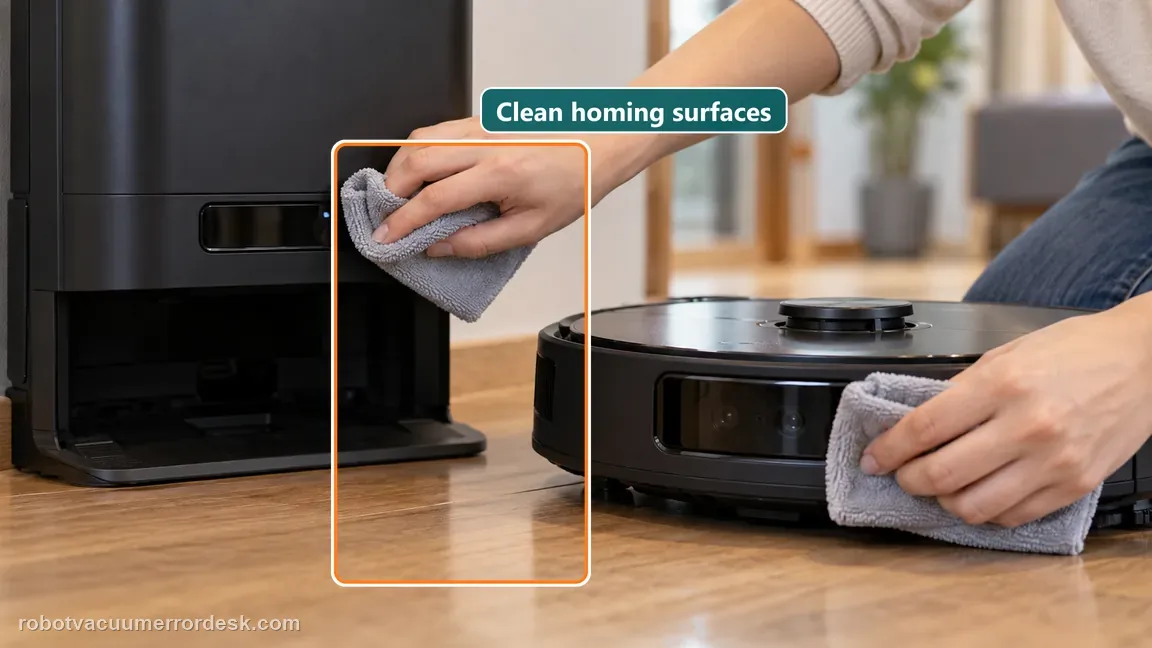
Clean the homing surfaces, not only the charging pads
Wipe the station’s front signal-transmission area and the Qrevo’s front sensor. These surfaces help the robot locate the dock. Dirty rear/charging contacts are a separate Error 13 branch; cleaning contacts alone does not prove the robot can see and navigate to the station.
Run a near return followed by an automatic cleaning return
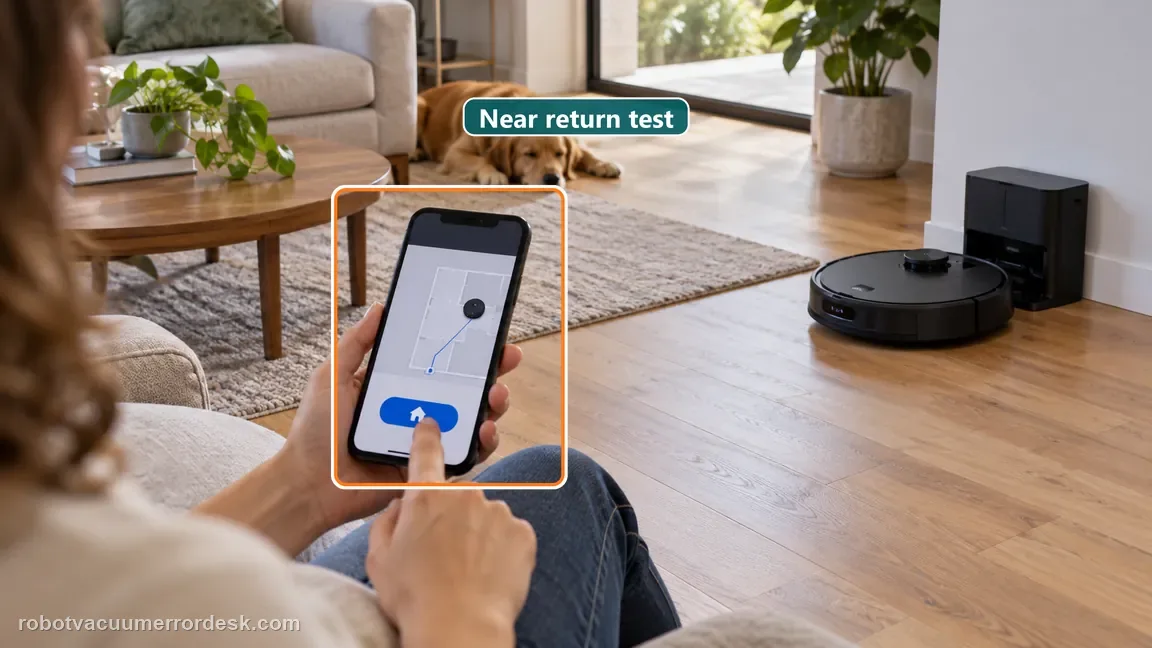
First command Return to Dock from a short distance. If that succeeds, run a small cleaning job that starts from the station and let the Qrevo return on its own. This two-stage comparison distinguishes final homing from the broader map/localization path.
Escalate or remap based on which stage failed
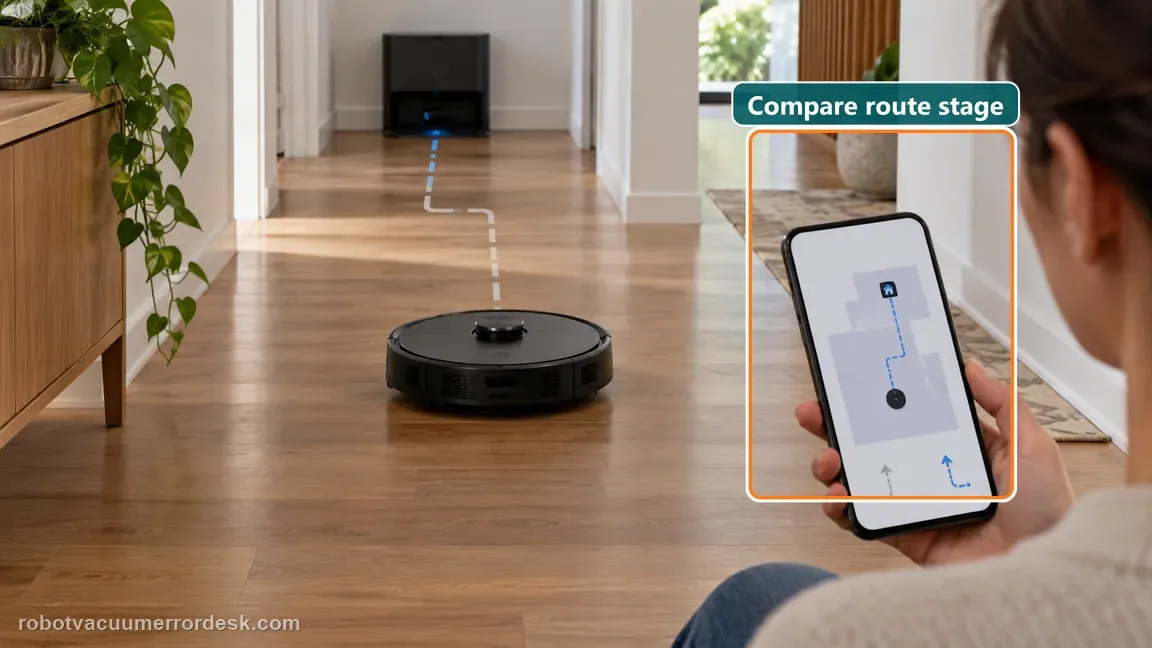
If the robot cannot find the dock from nearby after cleaning sensors and clearing the approach, stop focusing on the saved map. If nearby return is reliable but normal mission return repeatedly fails, preserve the map state and follow Roborock’s map recovery guidance before escalating.
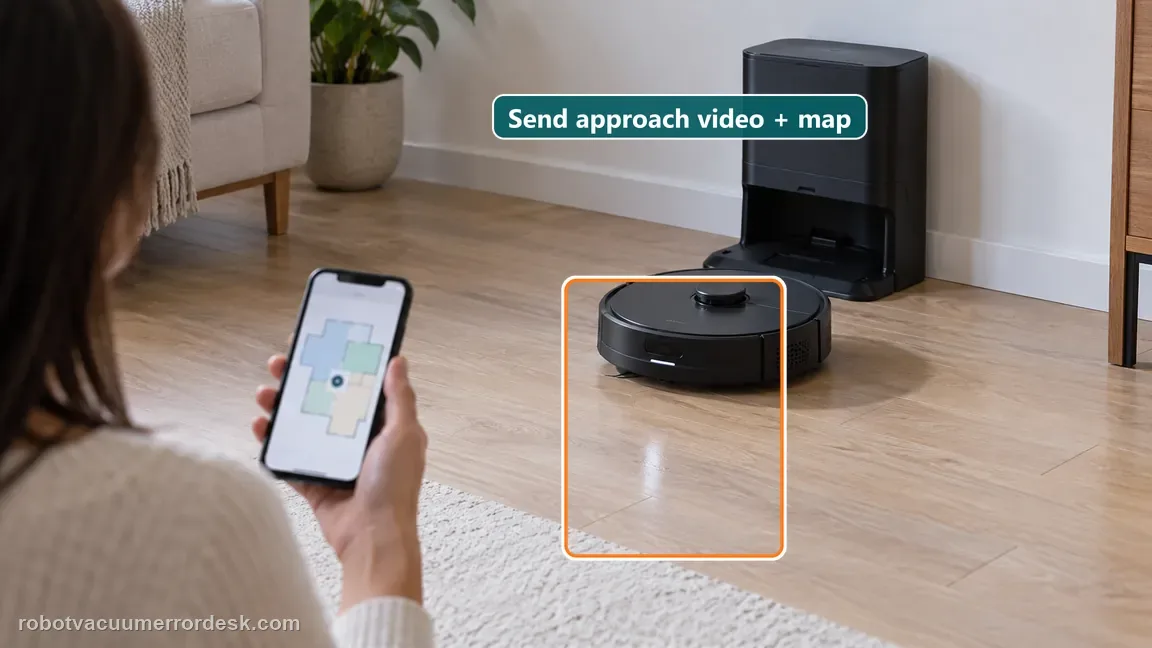
Contact Roborock if the Qrevo still cannot locate the RockDock after a clean near-return test, correct clearance, clean homing surfaces and a no-carry run from the mapped dock. Send a video showing the approach plus a map screenshot. If the robot reaches the station but a function fails afterward, report that specific charging, washing or emptying symptom instead of calling it a docking-location failure.
Information to have ready for support
Support can skip the basic troubleshooting script when you provide a reproducible case. That keeps the results of your checks from getting lost.
- Exact model name and the error code / voice prompt exactly as shown
- A photo or screenshot of the app error and the time it occurred
- A short list of the checks already completed and what happened after each one
- Firmware/app version if the issue began after a software change
Source and evidence level
Roborock Qrevo troubleshooting — dock return
Roborock’s Qrevo troubleshooting uses the same core return-to-dock discriminators: manual relocation/different start location, obstacles, about 0.5 m side and 1.5 m front dock clearance, and clean dock-signal and robot-front sensor surfaces. The product support landing page provides the Qrevo manuals. This guide also separates locating the RockDock from charging, washing and emptying failures that occur only after arrival.
Additional official source: Roborock Qrevo product support and manuals ↗Last editorial review: October 13, 2026Regional note: manufacturer help centers, model suffixes, mains-power requirements and warranty procedures can differ by country. If the source redirects to a local support site, confirm that the model/hardware scope still matches before following a region-sensitive step.
This guide is rated Official model support. See what each evidence label means →
Common questions
Why can my Qrevo charge when I put it on the dock but still fail to find the dock?
Manual placement proves that the charging interface can work, not that autonomous homing works. Finding the RockDock also depends on the saved location context, the station’s signal area, the robot front sensor and a clear approach. Command a return from nearby without touching the robot; that is a much better test of the locating function than manually seating it.
How much clearance should a Roborock Qrevo dock have?
Roborock’s troubleshooting recommends about 20 inches of free space to either side and 59 inches ahead of the dock. The large station should sit stably against a wall with no cords, bins or furniture narrowing its approach. Keep that placement fixed during diagnosis so a successful or failed return is not confounded by a moving reference.
Can carrying my Roborock Qrevo make it lose the dock?
Yes. Roborock notes that manual relocation or starting from a different location can contribute to return-to-dock problems. Let the Qrevo localize on the mapped floor, avoid lifting it and run a short task that starts from the station. An uninterrupted automatic return tells you far more about navigation than a test where the robot was moved by hand.
What should I clean when the Qrevo cannot find the RockDock?
Clean the dock’s front signal-transmission area and the robot’s front sensor, because Roborock specifically identifies those surfaces for finding the station. Charging contacts are relevant after the Qrevo reaches the dock and tries to charge. If the robot never locates or approaches the station, focus on homing surfaces, clearance and localization first.
How do I tell a Qrevo docking problem from a station problem?
Watch where the failure occurs. If the Qrevo cannot locate or approach the RockDock, troubleshoot homing and map context. If it reaches and seats on the station but does not charge, wash or auto-empty, navigation succeeded and a different subsystem is failing. Keeping those branches separate prevents unnecessary remapping for an electrical or station-function issue.
What does the Qrevo do if it cannot find the RockDock?
The Q Revo manual says a robot that cannot locate its dock returns to its start; place it on the dock to recharge. Record whether it returns to the start or searches near the station. Retest from the unmoved dock with the same map and obstacles. Carrying the robot or moving the station changes context, so that test cannot establish beacon failure.
Can the floor or sunlight near a Qrevo dock affect docking?
The manual calls for a hard, flat floor, the dock flat against a wall, and an unobstructed beacon. A rug can tilt the station; direct sunlight or an object can block the beacon. Remove the rug or shade/relocate the station, then retest without moving it. These placement checks can explain a failed return but do not prove an internal sensor failure.
Did this diagnostic narrow the fault?
Use this as an editorial signal, not a popularity counter. If a feedback address is configured you can email the note; otherwise you can copy it for your own support record.