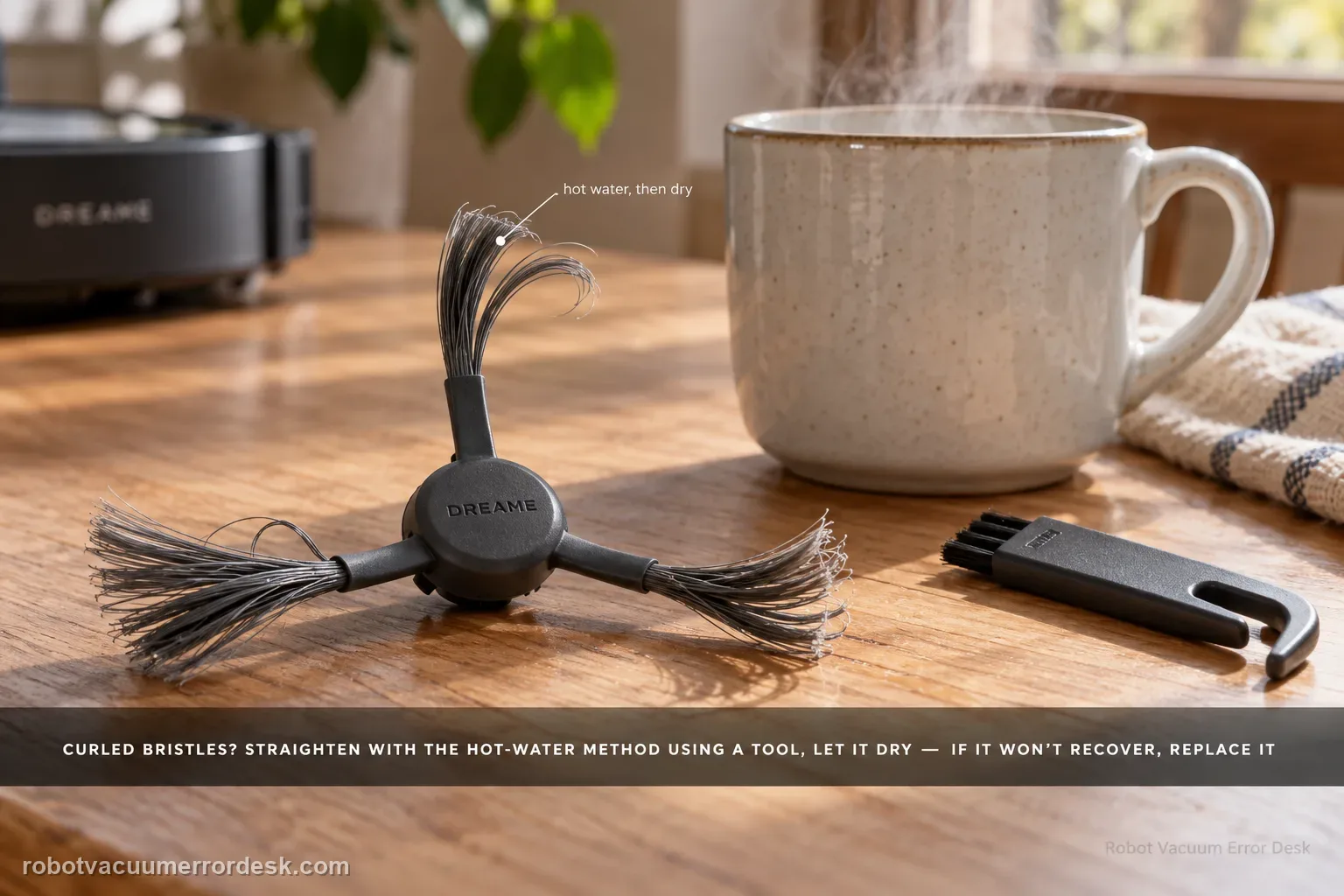
Dreame says the Aqua10 side brush uses nylon bristles that can curl in packaging or daily use. For deformation alone, remove the brush and follow the manufacturer’s hot-water straightening method using a tool rather than handling heated bristles directly; let the brush cool and dry before reinstalling it. If the bristles still do not recover, replace the brush. This page is not for a brush that will not rotate or keeps falling off — those symptoms use the separate side-brush drive/entanglement path.
Confirm the exact model and exact code, light pattern or symptom.
Run the lowest-risk physical or software check first.
Use each pass condition to decide what the result actually narrows down.
Does this match your problem?
- The side-brush bristles are visibly curled or bent.
- The brush still rotates but does not sweep its normal area cleanly.
- The deformation appears to be in the nylon bristles rather than a broken motor arm.
Most likely causes
Nylon side-brush bristles curled during packaging or ordinary cleaning use.
Bristles remain visibly asymmetric after one manufacturer-described straightening attempt.
Brush hub is cracked or material is missing, which hot-water shaping cannot repair.
A separate non-rotation, abnormal-noise or falling-off fault being mistaken for simple bristle deformation.
What your test result means
| What you observe | What it narrows down | Next move |
|---|---|---|
| Only nylon bristles are curled | The documented deformation case matches | Use Dreame’s hot-water straightening method carefully. |
| Hub or arm is cracked | This is not simple bristle curl | Replace the side brush rather than heating the damaged part. |
| Bristles recover and clear the body | The deformation was reversible | Run a short edge-cleaning test. |
| Bristles stay bent after one attempt | The brush no longer holds its intended shape | Replace with the correct side brush. |
| New brush is shaped correctly but does not rotate | The problem is no longer deformation | Switch to the side-brush-not-rotating diagnostic. |
Do not factory-reset by default. Use the exact model’s reboot/network-reset procedure only when the manufacturer path calls for it.
Run these checks in order
Confirm the problem is bristle shape, not a drive fault
Run a brief visual check while the robot is cleaning. If the side brush rotates and stays attached but the nylon bristles are curled or swept out of shape, continue here. If the brush does not rotate, makes abnormal noise or falls off, use the separate side-brush troubleshooting path instead; a shape treatment does not diagnose the motor or mounting.
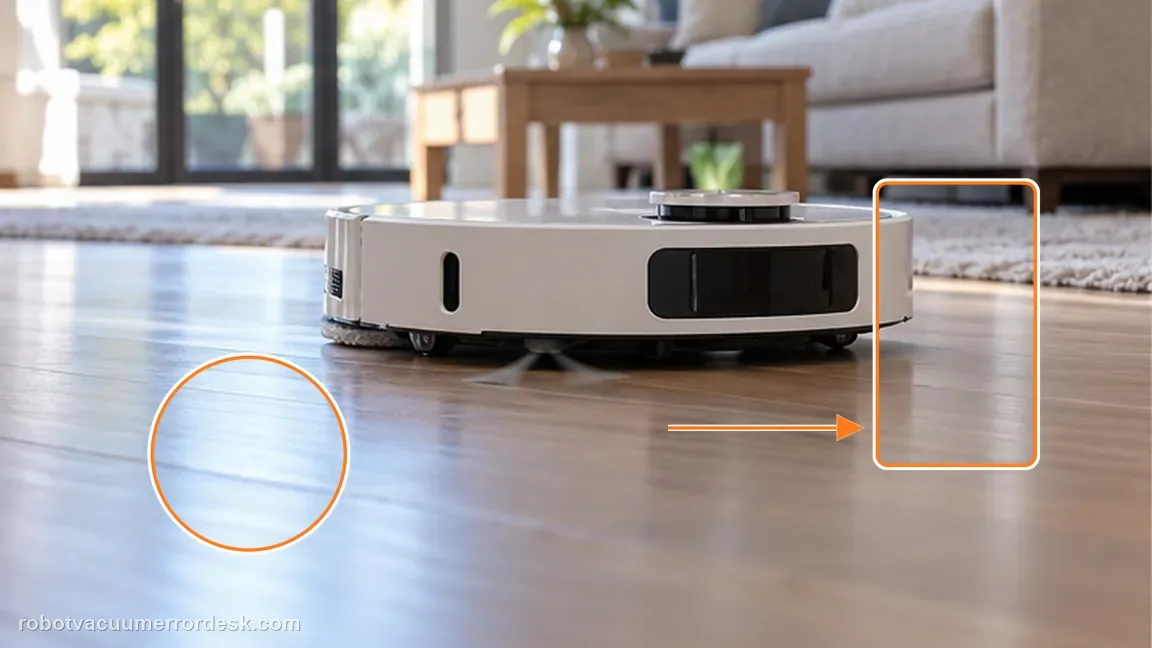
Power off and remove the side brush
Use the Aqua10 manual’s normal owner-maintenance path: unscrew the side brush and remove it from the robot before any hot-water treatment. Keeping the brush separate protects the robot from water and lets you inspect the hub and bristles from all sides. Do not pour hot water onto the installed robot.
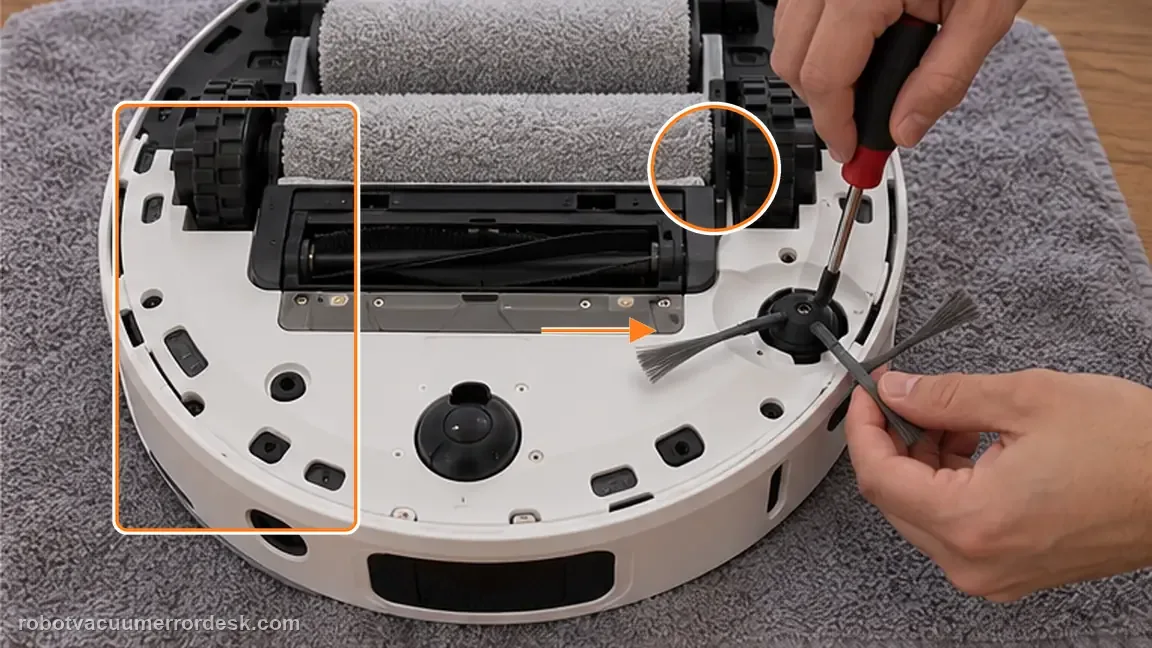
Inspect the hub before trying to straighten bristles
Check for a cracked hub, missing bristles or other physical damage. Dreame’s exact deformation article is about curled nylon bristles; hot water cannot repair a broken hub or replace missing material. A structurally damaged brush should be replaced rather than heated and forced back into service.
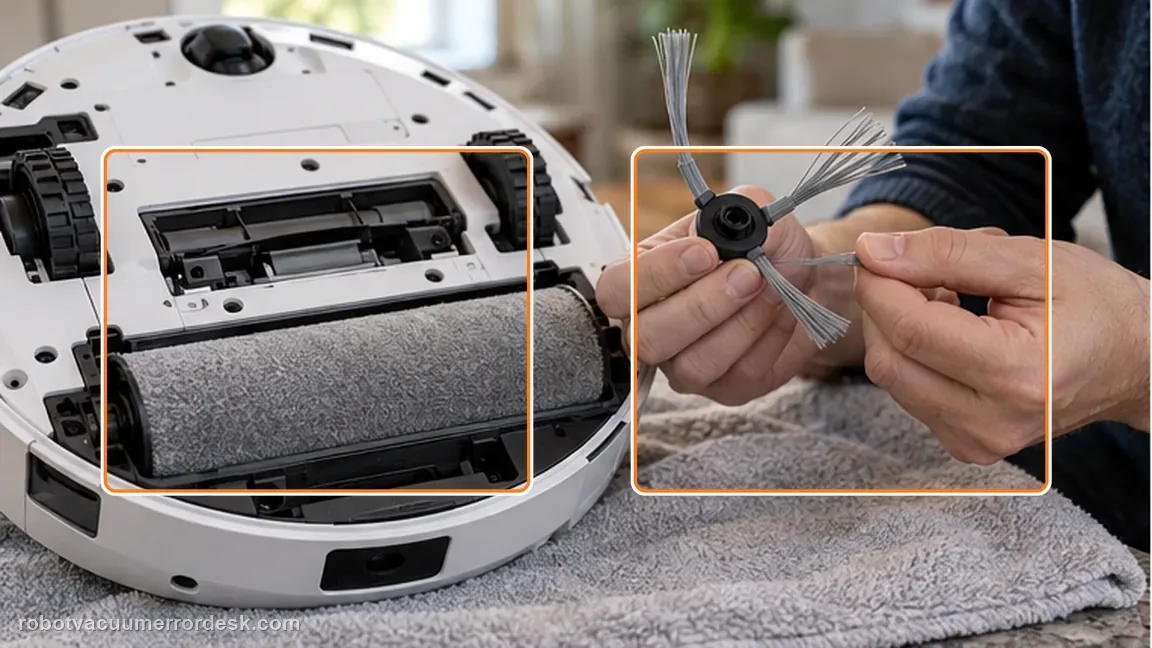
Follow Dreame’s hot-water straightening method on the removed brush
Dreame says curled Aqua10 side-brush bristles can be treated with hot water and a tool to help straighten them. Use the method only on the removed brush, keep hands away from the hot water and do not invent a higher temperature than the manufacturer provides. Shape gently rather than twisting the hub. Let the part cool and dry fully before reinstalling it.
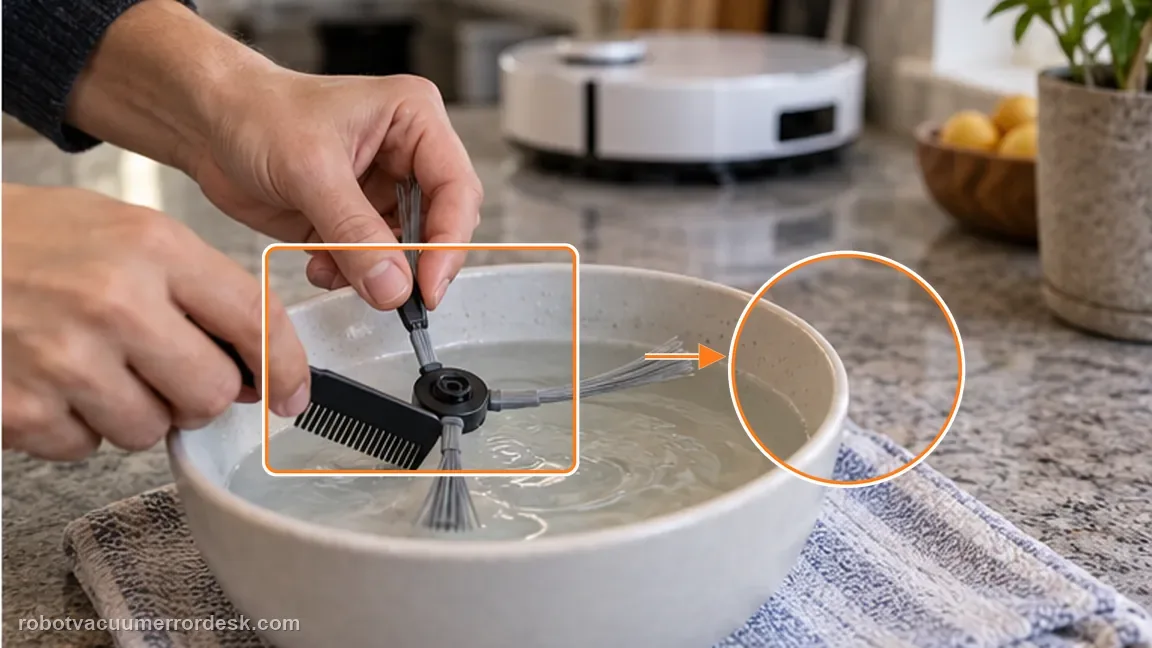
Replace the brush if deformation remains, then run one proof clean
Dreame says to replace the side brush if it is still deformed. Reinstall the restored or replacement brush securely and run a short edge-cleaning pass. Watch for even sweep and normal clearance from the chassis. If a correctly shaped brush now fails to rotate or stay attached, switch to the separate drive/entanglement diagnosis rather than repeating hot-water treatment.
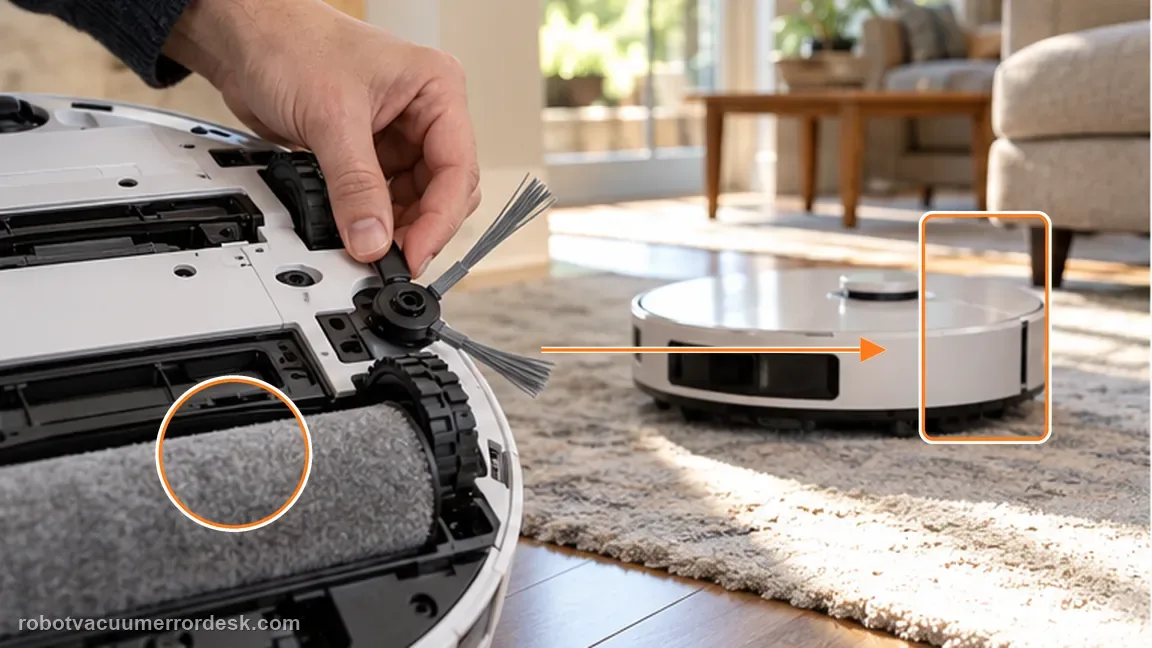
If a restored or replacement side brush is correctly shaped but still will not rotate, makes abnormal noise or repeatedly falls off, use the separate side-brush non-rotation path or contact Dreame. Do not repeat hot-water treatment for a motor or mounting fault. Replace any brush with a cracked hub or missing material rather than trying to reshape structural damage.
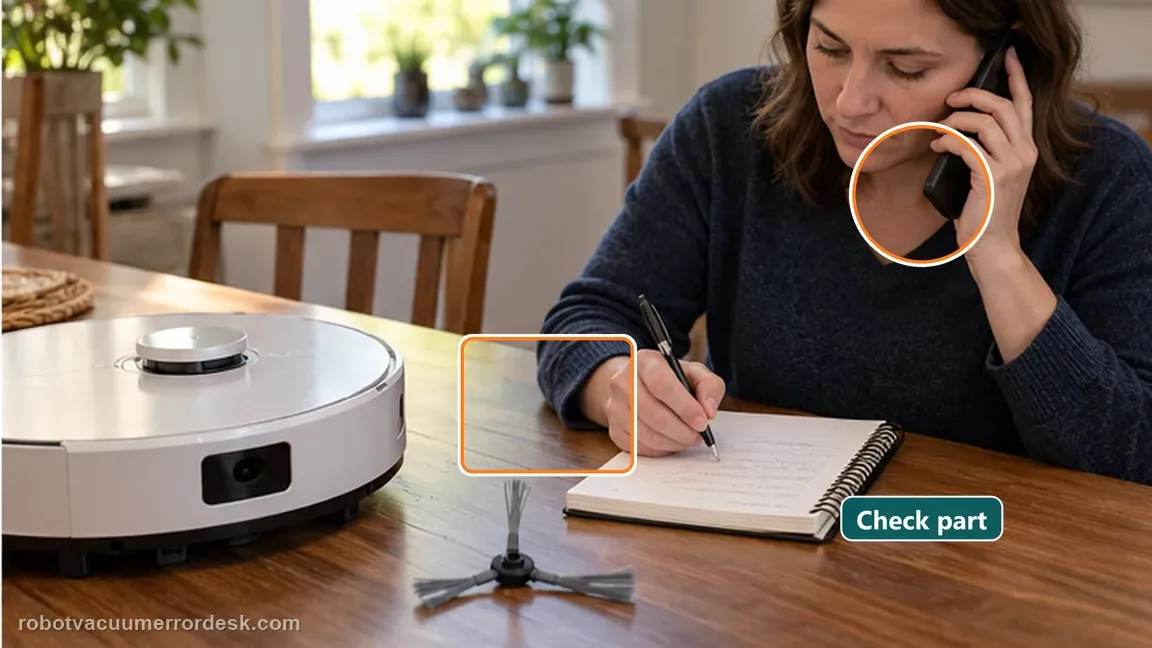
What to collect before contacting support
Give support a reproducible case instead of “it doesn’t work.” That reduces repeated basic troubleshooting and preserves the clues from your tests.
- Exact model name and the error code / voice prompt exactly as shown
- A photo or screenshot of the app error and the time it occurred
- A short list of the checks already completed and what happened after each one
- Short video showing the failed docking, mapping or base-station behavior
- Firmware version shown in Dreamehome
Manufacturer evidence
Dreame Aqua10 — side brush deformed
Dreame says the Aqua10 side brush uses nylon bristles that may curl in packaging or daily use. Its exact-model article describes one hot-water straightening attempt using a tool, followed by replacement if deformation remains. The official manual confirms the side brush is owner-removable by unscrewing it for cleaning/service.
Additional official source: Dreame Aqua 10 Ultra Roller Complete — Support Hub ↗Additional official source: Dreame Aqua 10 Ultra Roller Complete — User Manual ↗Last editorial review: September 5, 2026Regional note: manufacturer help centers, model suffixes, mains-power requirements and warranty procedures can differ by country. If the source redirects to a local support site, confirm that the model/hardware scope still matches before following a region-sensitive step.
This guide is rated Official model support. See what each evidence label means →
FAQ
Can hot water straighten a curled Aqua10 side brush?
Dreame says the side brush uses nylon bristles and its exact Aqua10 article describes hot-water treatment with a tool to straighten curling from packaging or daily use. Remove the brush from the robot first, keep the robot dry, avoid direct contact with hot water and let the brush cool and dry completely before reinstalling it. Do not treat a cracked hub as a bristle-shape problem.
Should I use boiling water on the side brush?
Do not invent a temperature beyond the manufacturer’s wording. Dreame says to use hot water; the article does not provide a specific temperature in the text. Use the method conservatively on the removed brush, keep hands away from the hot water and shape the nylon bristles with a tool rather than forcing the hub. If the bristles remain deformed afterward, replace the brush.
When should I replace the side brush instead of reshaping it?
Replace it when the bristles remain deformed after the manufacturer-described straightening attempt, or when the hub is cracked or material is missing. Hot-water shaping is only for curled nylon bristles. After installing a correctly shaped brush, run one short edge-cleaning pass. If it then fails to rotate or stay attached, move to the separate drive/entanglement diagnosis rather than applying more heat.
What if the brush is deformed and also will not rotate?
Treat the symptoms separately. First make sure the test brush is clean, correctly shaped and securely mounted. If non-rotation remains, use the side-brush-not-rotating guide, which checks tangles, cables, mounting and a known-good brush before support. The hot-water method in the deformation article does not prove or repair a failed side-brush motor, so do not use shape recovery as a substitute for the drive test.
Why should the brush be removed before hot-water treatment?
The Aqua10 manual already provides an owner-maintenance path for unscrewing the side brush, and removing it keeps water away from the robot’s electronics and drive. It also lets you inspect the hub and shape the bristles evenly. Reinstall only after the brush is cool and fully dry. Never pour hot water onto the installed brush or robot in an attempt to straighten it in place.
Did this diagnostic narrow the fault?
Use this as an editorial signal, not a popularity counter. If a feedback address is configured you can email the note; otherwise you can copy it for your own support record.