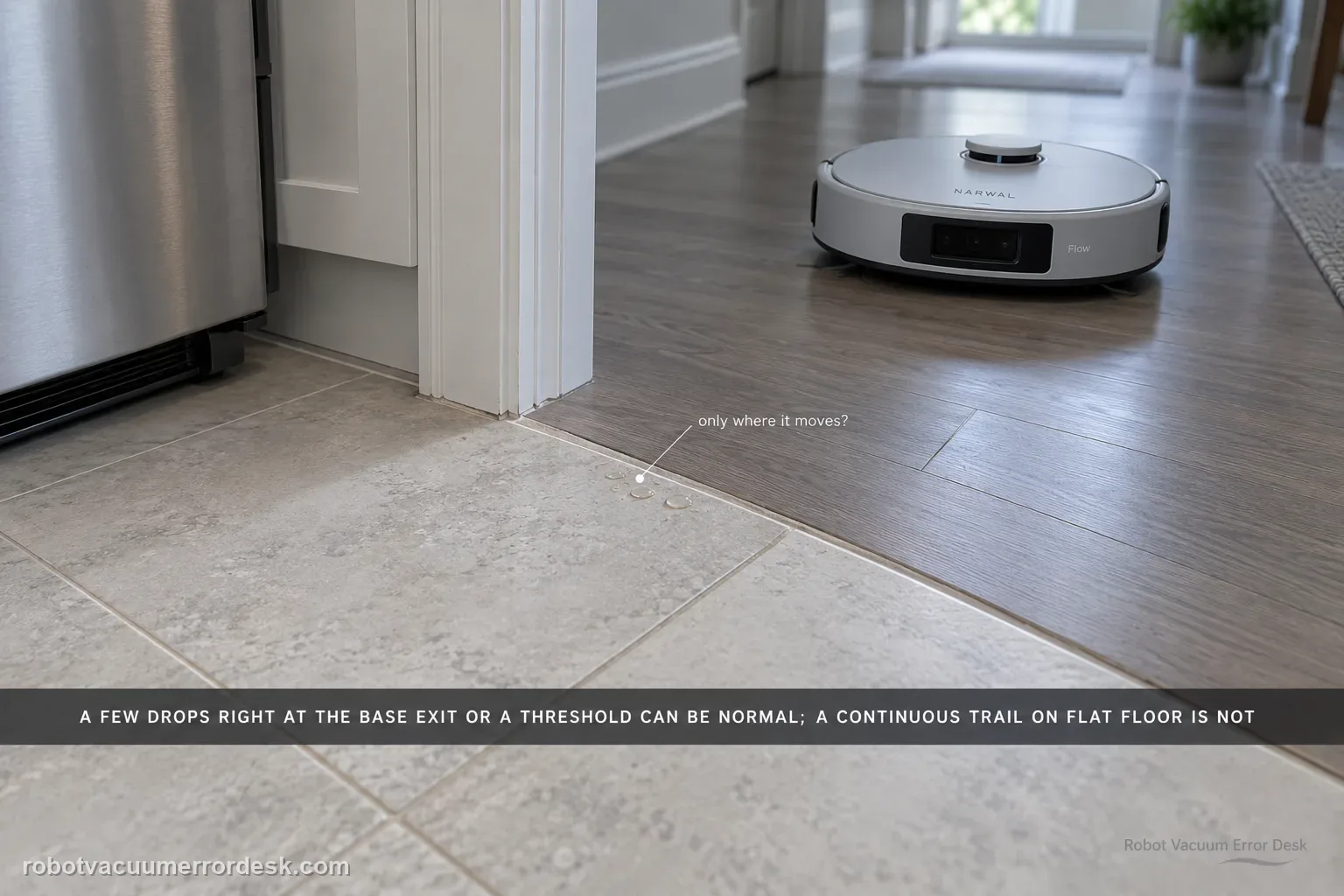
Narwal says Flow normally leaves no water in most cases, but a few droplets can be normal after significant movement—especially when the robot exits the base station or climbs a threshold. Treat quantity and pattern as the key discriminator. Dry the floor, repeat the same short route and note whether moisture is limited to those movement events or forms a continuous trail/puddle during ordinary travel. Do not open the internal water path for a few isolated drops. If the residue is clearly noticeable or persistent, Narwal asks for the robot serial number and a video of the robot operating.
Confirm the exact model and exact code, light pattern or symptom.
Run the lowest-risk physical or software check first.
Use each pass condition to decide what the result actually narrows down.
Is this the problem you’re seeing?
- You see a few droplets after the Flow exits its base or crosses a threshold.
- You need to know whether small residual water is expected.
- The floor shows more noticeable water and you are deciding whether to escalate.
Likely root causes, ranked
Normal small residual droplets released by significant motion when leaving the base or crossing a threshold
A repeat route that leaves more than the small amount Narwal describes as normal
A continuous trail or stationary puddle that should not be normalized as ordinary post-mop moisture
Environmental/threshold geometry that makes droplets appear only at one movement event
A persistent wet-system issue that needs Narwal video evidence rather than internal owner disassembly
What the result narrows down
| What you observe | What it narrows down | Next move |
|---|---|---|
| A few isolated drops appear immediately after dock exit | Narwal lists significant base-exit movement as a normal source of small residual water. | Dry the area and compare one repeat run before taking action. |
| A few drops appear only while crossing a threshold | Narwal explicitly lists threshold climbing as another normal movement event. | Compare the same settings on flat floor and monitor the quantity. |
| Flat-floor travel stays dry between movement events | The pattern fits event-specific residual moisture rather than a continuous leak. | Monitor without internal disassembly if the amount remains small. |
| A continuous wet trail or stationary puddle appears | This exceeds Narwal’s “small amount/few droplets” description. | Stop wet testing if needed and record the condition for support. |
| Excessive residue repeats on the same route | The symptom is stable enough for service diagnosis. | Send Narwal the SN, operating video and route/timing details. |
Do not factory-reset by default. Use the exact model’s reboot/network-reset procedure only when the manufacturer path calls for it.
Checks to run, in sequence
Start from a dry floor and classify the amount, not just the presence of water
Wipe the test area dry before the run and photograph the baseline. Narwal says that in most cases no water should be left, but a small amount—a few droplets—can still be normal. Use that wording carefully: isolated drops are not the same as a wet trail or puddle. Mark where the moisture appears and avoid calling every reflective damp patch a leak before the quantity and pattern are repeatable.
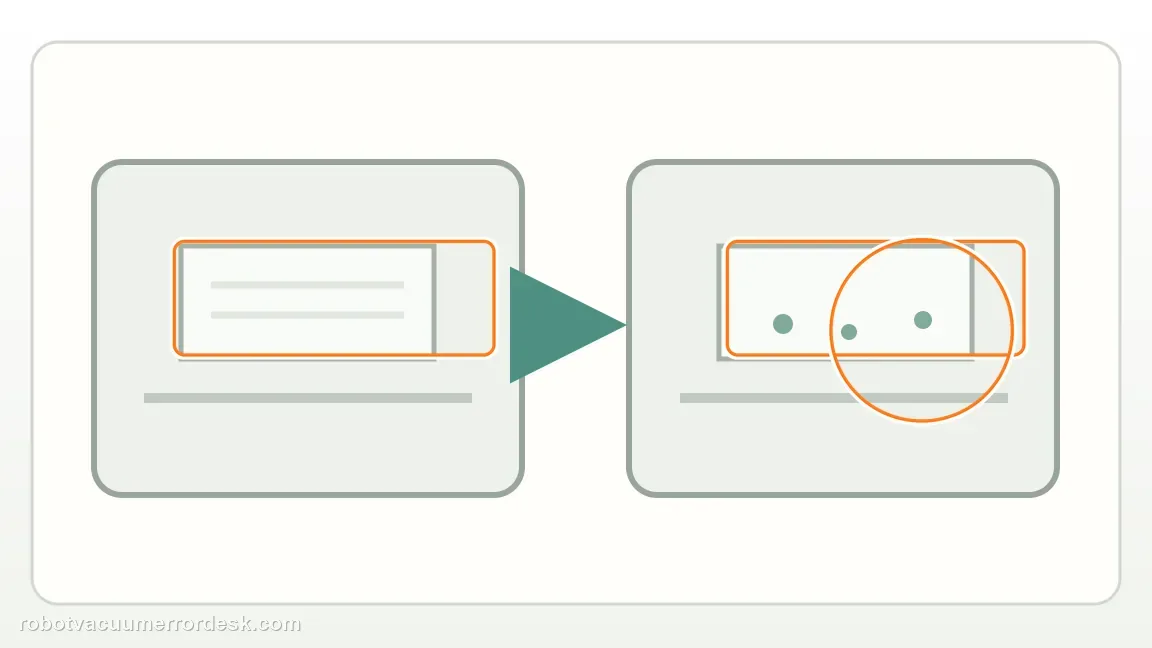
Check whether the droplets follow dock exit or threshold crossing
Narwal specifically names significant movement when Flow exits the base station or climbs over thresholds as situations where a few droplets may appear. Note whether the water is concentrated immediately after one of those events. If the same robot leaves a dry path across flat open floor but drops a small amount at one threshold, that pattern fits the manufacturer’s explanation better than a general internal leak.
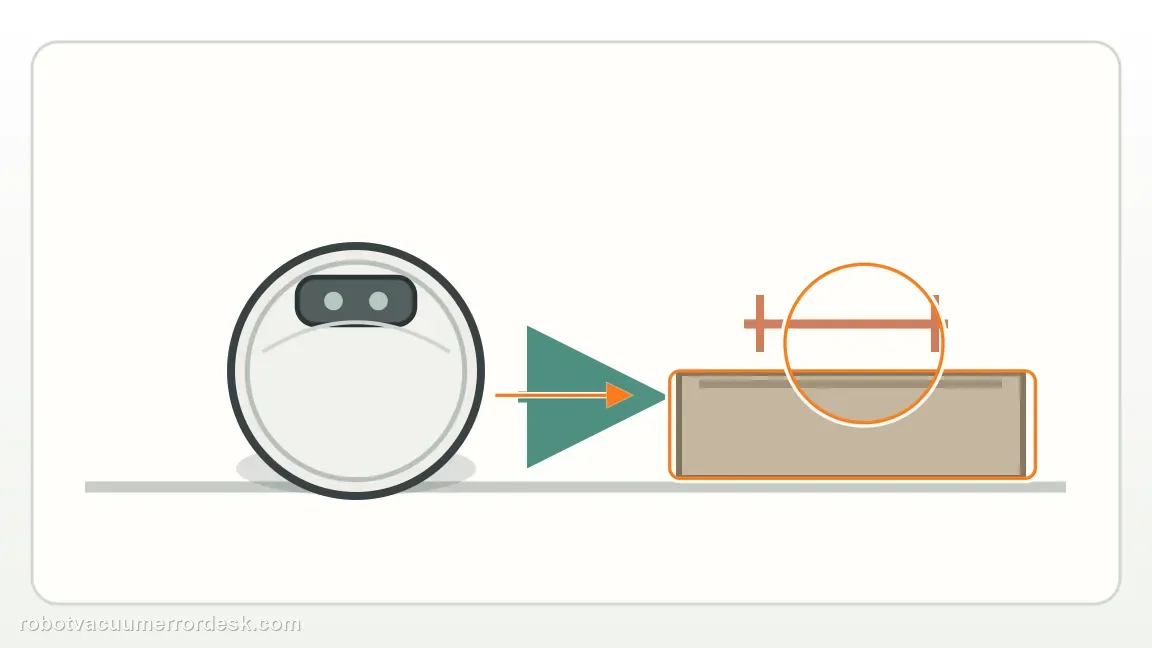
Repeat the same short route on flat floor and across the suspect threshold
Run one controlled comparison after drying the area again: first use a flat section, then the route that includes the threshold or dock exit where the drops appeared. Keep the cleaning mode and water settings unchanged. The goal is not to eliminate every damp mark; it is to see whether the water follows a specific movement event and stays within the “few droplets” description or grows into a repeatable continuous pattern.
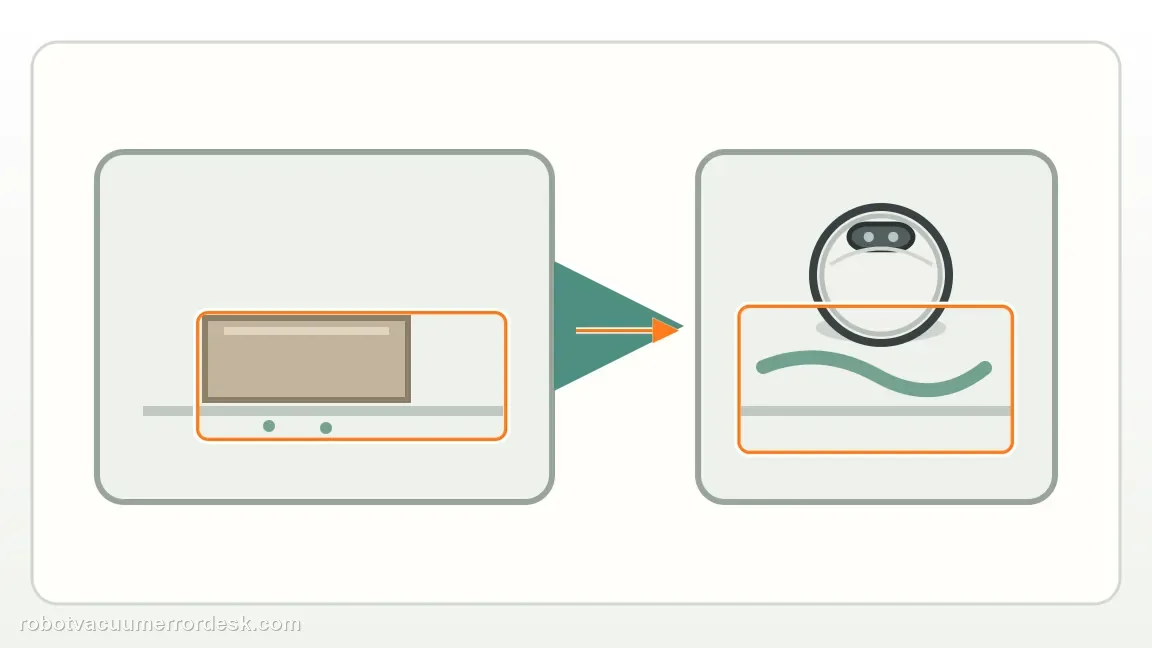
Treat a continuous trail or stationary puddle as outside the normal-droplet description
Narwal’s page normalizes only a small amount of residual water. If Flow leaves a wet trail across normal flat travel, creates a puddle while stationary, or the amount increases run after run, stop labeling it as ordinary residual moisture. End the wet task if water could spread under furniture or toward electrical areas. Do not open sealed water components; preserve the condition for support rather than turning an external symptom into an internal repair attempt.
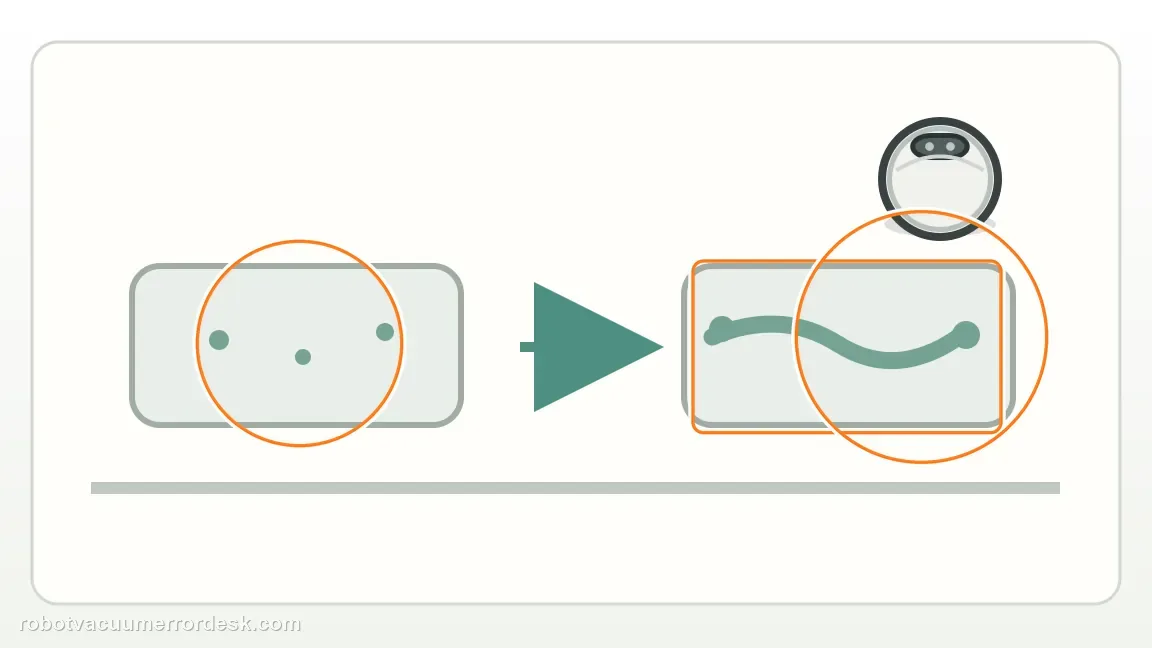
Do not change detergent or water settings simply to make the symptom disappear
Keep the test focused on the residual-water pattern. Changing detergent concentration, several app settings or station setup at the same time makes the comparison harder to interpret and can create foam or a different wet-system behavior. If the robot otherwise mops normally and only a few movement-related drops appear, monitor them. If the residue is excessive, the next manufacturer-directed step is evidence for support rather than an improvised internal water-path adjustment.

Capture the serial number and operating video when residue is noticeable
Narwal specifically asks owners with noticeable residual water to provide the robot serial number and a video of the robot in operation. Film the route closely enough to show whether water appears at dock exit, at a threshold or during ordinary flat-floor travel, and photograph the final amount on the previously dry floor. State whether the event repeats on the same route. This evidence is the correct escalation boundary for a symptom that exceeds a few normal droplets.

Escalate when the water is clearly more than a few isolated droplets, forms a repeat trail/puddle, or appears during ordinary flat-floor travel rather than only after dock exit or threshold movement. Narwal asks for the robot serial number and an operating video. Do not open the sealed water path or compensate with extra detergent/settings changes while gathering evidence.

Information to have ready for support
Support can skip the basic troubleshooting script when you provide a reproducible case. That keeps the results of your checks from getting lost.
- Exact model name and the error code / voice prompt exactly as shown
- A photo or screenshot of the app error and the time it occurred
- A short list of the checks already completed and what happened after each one
- Robot serial number (SN) and a short video showing the wet-system behavior
Source and evidence level
Narwal Flow — residual moisture after mopping
Narwal’s Flow-specific page says most runs leave no water, but a few droplets can occur after significant movement when exiting the base or crossing thresholds; a small amount is considered normal. If residue is noticeable, Narwal asks for the robot serial number and an operating video.
Additional official source: Narwal — how to check robot serial number ↗Additional official source: Narwal Flow support section ↗Last editorial review: September 5, 2026Regional note: manufacturer help centers, model suffixes, mains-power requirements and warranty procedures can differ by country. If the source redirects to a local support site, confirm that the model/hardware scope still matches before following a region-sensitive step.
This guide is rated Official model support. See what each evidence label means →
Common questions
Is a small amount of water behind Narwal Flow normal after mopping?
Narwal says most Flow runs leave no water, but a few droplets can occur after significant movement, especially when the robot exits the base station or climbs a threshold. Judge the quantity and pattern. A small isolated amount at those events can be monitored; a continuous wet trail, stationary puddle or worsening residue is outside that narrow normal description.
Why does Narwal Flow leave drops near a threshold?
Narwal specifically names threshold climbing as a movement that can release a few residual droplets. Dry the area and compare the same mopping settings on a flat route and then across the threshold. If moisture appears only at that movement event and remains minor, it fits the documented explanation better than a constant leak that follows the robot everywhere.
How can I tell normal Flow droplets from a real water problem?
Start on a dry floor and look for pattern rather than a single mark. A few isolated droplets after dock exit or threshold movement can be normal according to Narwal. A continuous trail during ordinary travel, a puddle under a stationary robot, or residue that increases on repeated runs should be treated as excessive and documented for support.
Should I open the Narwal Flow water system if I see a few drops?
No. Narwal’s Flow guidance already allows a small amount of movement-related residual water, so internal disassembly is not a sensible first response. Dry the floor and repeat a controlled route instead. If the water is noticeable or persistent, Narwal asks for the serial number and a video of the robot operating rather than owner access to sealed water components.
What evidence should I send Narwal for excessive Flow residual water?
Send the robot serial number, a close operating video and a photo of the final amount on a floor that was dry before the test. Note whether water appears at dock exit, a threshold or normal flat-floor travel, and whether the same route reproduces it. Narwal specifically asks for SN and video when the residue is noticeable.
Did this diagnostic narrow the fault?
Use this as an editorial signal, not a popularity counter. If a feedback address is configured you can email the note; otherwise you can copy it for your own support record.