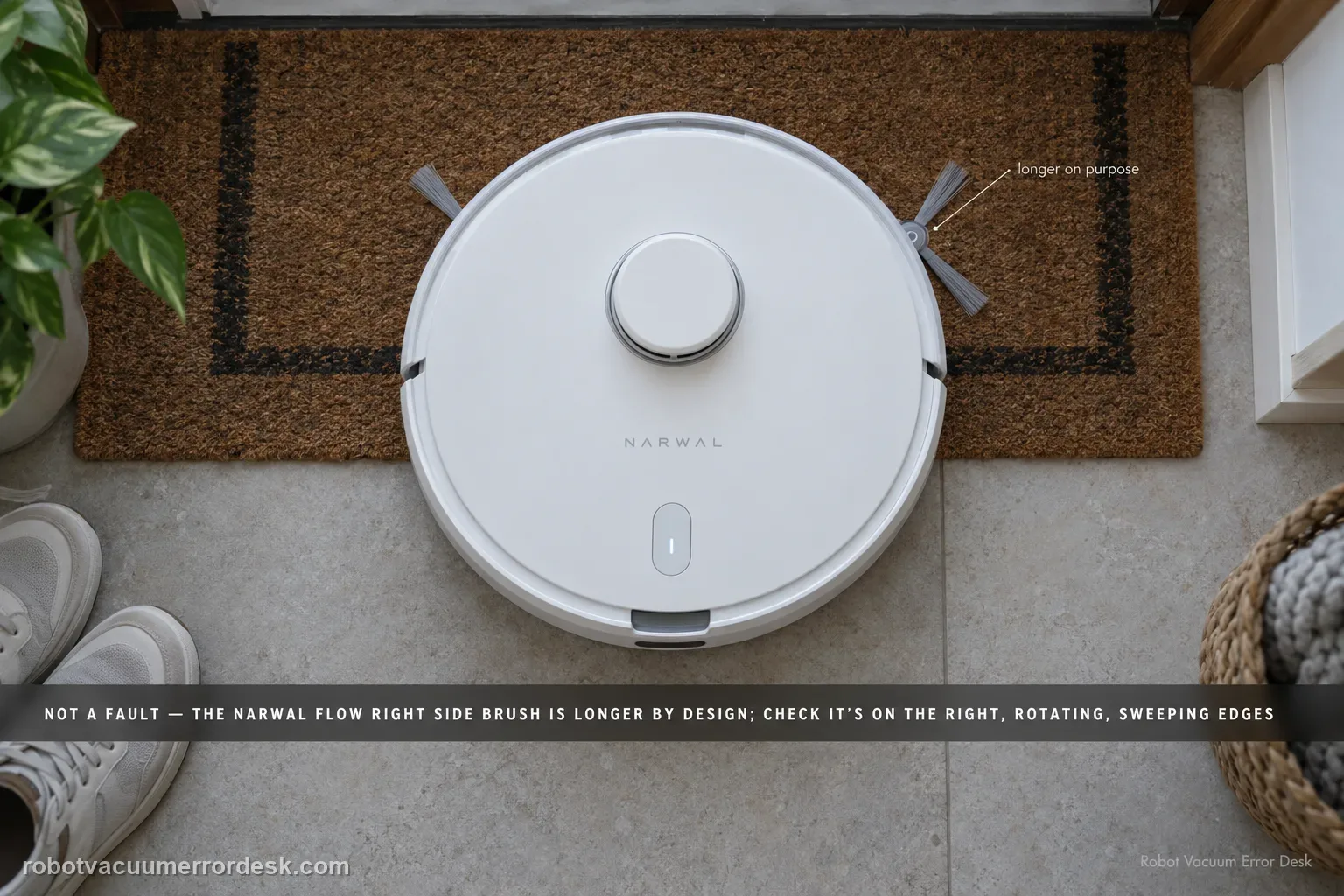
Yes—on Narwal Flow the right-hand side brush is intentionally longer. Narwal says the extra reach comes from the brush itself, not from an extend/retract actuator, so a healthy asymmetric pair should not be “fixed” or trimmed to match. Confirm the long brush is on the right, inspect for real damage or tangles, make sure any removed brush is seated correctly, and judge health by whether it rotates and sweeps edge debris normally. If the longer right brush stops rotating, repeatedly detaches or is physically damaged, that is a separate maintenance fault worth documenting for Narwal.
Confirm the exact model and exact code, light pattern or symptom.
Run the lowest-risk physical or software check first.
Use each pass condition to decide what the result actually narrows down.
Is this the problem you’re seeing?
- The right side brush looks longer than the other side.
- The brush still rotates and is not visibly broken.
- You are unsure whether the asymmetry is a mechanical extension fault.
Likely root causes, ranked
Normal Flow design: the right-hand side brush is intentionally longer
The longer brush is being mistaken for a stuck extension mechanism
A real fault exists only if the brush is damaged or does not perform its edge-cleaning motion normally
What the result narrows down
| What you observe | What it narrows down | Next move |
|---|---|---|
| Right brush is longer, intact and rotates normally | This matches Narwal Flow’s intended design. | Do not modify it; judge health by edge-cleaning function. |
| Owner expects a motorized extension arm | Narwal says Flow’s extra reach comes from the brush itself. | Do not force or disassemble a nonexistent side-brush extension mechanism. |
| Brush has hair at the hub or is poorly seated | A real maintenance issue can impair rotation independent of brush length. | Clean the hub, match the correct side/module and reinstall securely. |
| Brush repeatedly detaches or will not rotate after cleaning | Normal asymmetry no longer explains the symptom. | Capture video and contact Narwal with the robot SN. |
| Edge-cleaning pass is normal despite visible asymmetry | The longer right brush is performing its intended function. | Continue normal use and routine brush maintenance. |
Do not factory-reset by default. Use the exact model’s reboot/network-reset procedure only when the manufacturer path calls for it.
Checks to run, in sequence
Confirm that the longer brush is the right-hand Flow brush
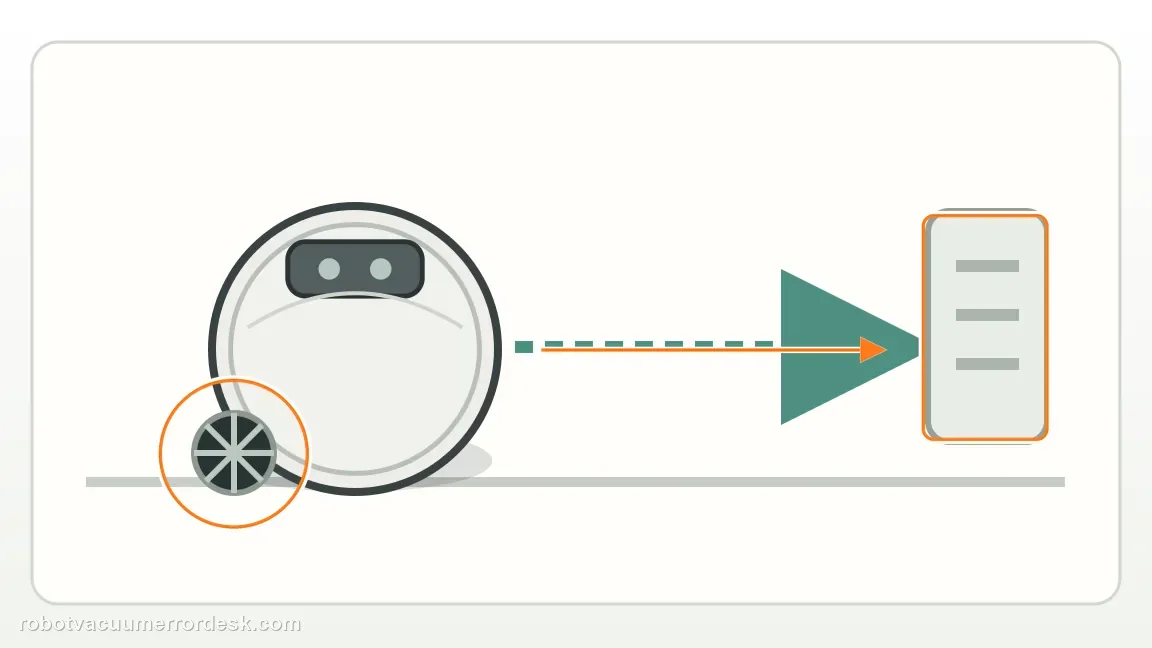
Narwal’s Flow-specific article says the right-hand side brush is the long-version brush. Compare the brushes at rest without pulling or stretching the bristles. Left/right asymmetry is therefore expected. If the longer brush is on the right and the hub/bristles are intact, the visual difference by itself is not evidence of a bent arm, missing part or factory defect.
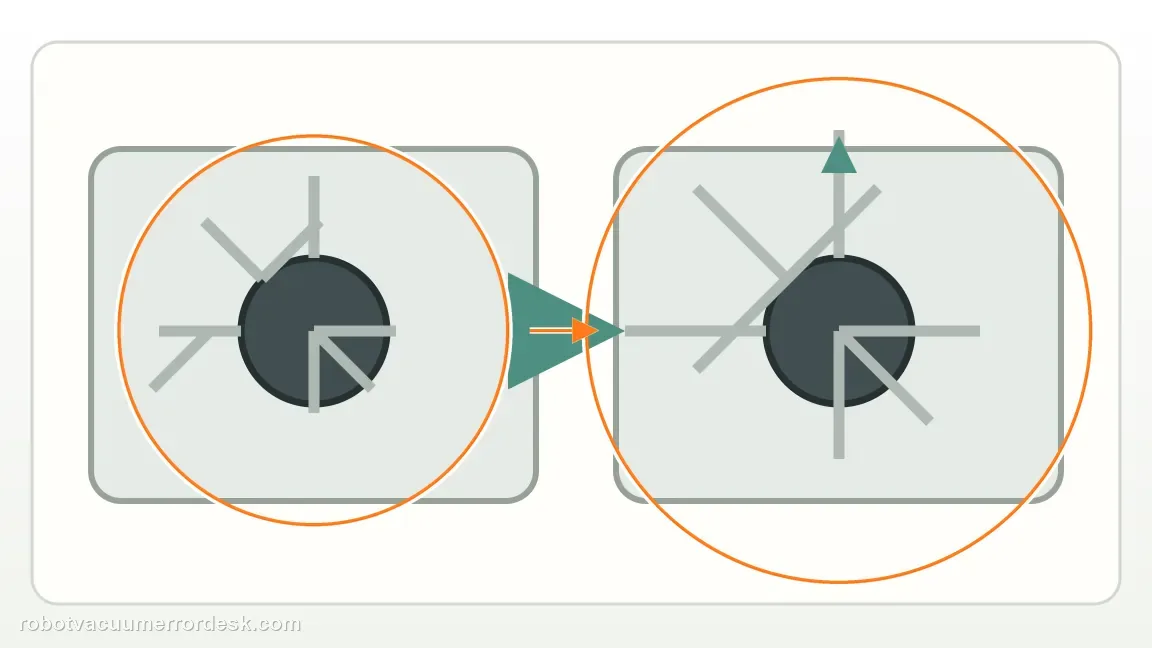
Do not troubleshoot a nonexistent extend/retract actuator
Narwal explicitly says it is the brush itself that is longer rather than a mechanical module extending or retracting it. That distinction matters because Flow owners can otherwise waste time looking for a stuck extension arm that this brush design does not use. Do not pry the brush outward, force a hidden mechanism or compare it with models that use a motorized side-brush extension.
Inspect real wear, tangles and seating instead of trying to make the two sides equal
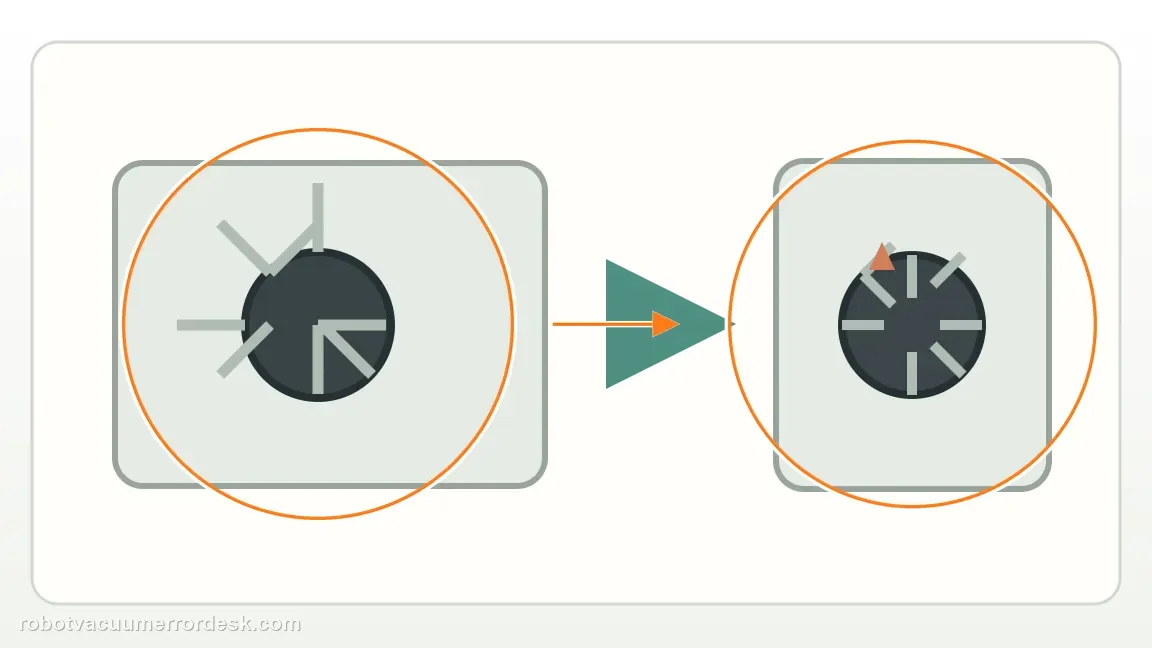
Look for broken or missing bristles, severe deformation, hair wrapped at the hub, a loose brush or a brush that was reinstalled incorrectly after maintenance. Narwal’s accessories guide says side brushes should be matched to the correct module color when installed and should click securely into place. Those are real service conditions. Trimming a healthy long right brush to match the left would remove the reach Narwal designed for walls and corners.
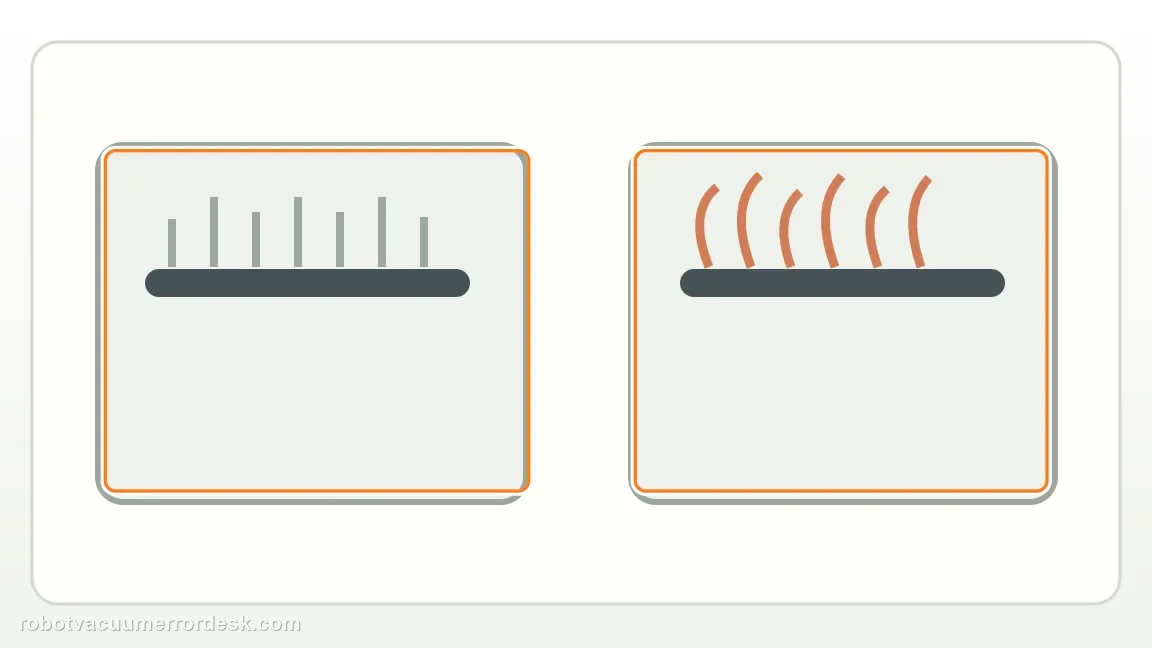
Use edge-cleaning behavior as the functional check
Narwal says the longer right brush is meant to reach corners and walls. Its Flow edge-cleaning article also describes reverse rotation that increases cleaning radius around edges. Run a short pass along a straight wall and observe whether the right brush rotates freely and sweeps debris inward without binding. Successful edge behavior is a better health check than visual symmetry because the design is intentionally unequal.
Separate normal asymmetry from detachment, non-rotation or severe deformation
If the only concern is that the right brush is longer, no repair is required. If it repeatedly falls off, Narwal’s accessory guidance says to reinstall it securely and confirm the click; persistent detachment should be escalated. If it does not rotate after tangle removal or the bristles/hub are clearly damaged, treat that as a consumable or drive-related fault. Do not use symmetry as the pass/fail criterion.
Document a real functional fault before contacting Narwal
For a healthy asymmetric brush, continue normal use. For a repeated detachment, non-rotation or severe deformation that survives cleaning and correct seating, record a short edge-cleaning video and include the robot serial number. Show the right brush at rest and while moving so support can see that the issue is functional rather than simply the expected longer geometry.
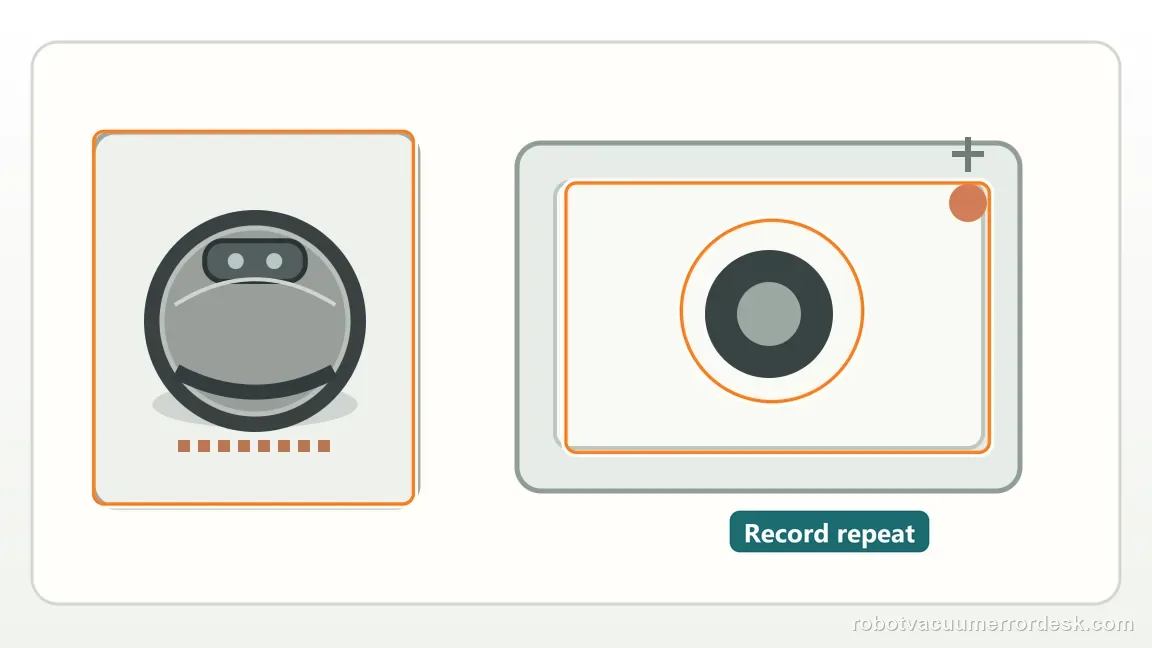
Unequal brush length alone is normal Flow design. Escalate only when the longer right brush has a separate observable fault—repeated detachment after correct seating, non-rotation after tangle removal, severe deformation or physical damage. Send a short edge-cleaning video and the robot serial number; do not trim the long brush or force an extend/retract mechanism that Narwal says does not exist.

Information to have ready for support
Support can skip the basic troubleshooting script when you provide a reproducible case. That keeps the results of your checks from getting lost.
- Exact model name and the error code / voice prompt exactly as shown
- A photo or screenshot of the app error and the time it occurred
- A short list of the checks already completed and what happened after each one
- Map screenshots and robot location when the problem involves localization, zones or docking
Source and evidence level
Narwal Flow — longer right side brush
Narwal documents that the Flow’s right-hand side brush is intentionally longer and is not an extend/retract mechanical module.
Additional official source: Narwal Flow — corners and table-leg cleaning ↗Additional official source: Narwal — robot vacuum accessories troubleshooting ↗Last editorial review: September 5, 2026Regional note: manufacturer help centers, model suffixes, mains-power requirements and warranty procedures can differ by country. If the source redirects to a local support site, confirm that the model/hardware scope still matches before following a region-sensitive step.
This guide is rated Official model support. See what each evidence label means →
Common questions
Why is the right side brush on Narwal Flow longer than the left?
Narwal says the longer right brush is intentional. It is designed to reach walls and corners more effectively, so the two sides are not supposed to look symmetrical. If the long right brush is intact, seated correctly and rotates normally, leave it as designed. Do not trim it, swap sides or try to make both brushes the same length.
Does the Narwal Flow side brush mechanically extend and retract?
No. Narwal specifically says the extra reach comes from the brush itself, not from a mechanical extend/retract module. That means an owner should not search for a hidden actuator or force the brush outward. Flow’s edge-cleaning behavior can still change rotation around walls and corners, but the physical right-brush length itself is fixed by design.
What side-brush condition is actually abnormal on Narwal Flow?
Look for problems separate from intentional length: hair wrapped at the hub, severe bristle deformation, a loose or repeatedly detached brush, broken/missing bristles or failure to rotate. Narwal’s accessory guidance also says removed brushes should be matched to the correct module and seated securely. Those conditions justify maintenance; a longer healthy right brush does not.
Should I trim the longer Narwal Flow side brush to match the left?
No. Trimming the right brush would remove the extra corner and wall reach Narwal intentionally designed. If the bristles are merely unequal because the right side is the long-version brush, do nothing. Only service the brush for real wear, tangles, poor seating, detachment or non-rotation, and use official replacement parts if the consumable is genuinely damaged.
How should I test whether the longer Narwal Flow side brush is working?
Run a short pass along a straight wall and watch the right brush. Narwal says the long brush exists to reach corners and walls, and its Flow edge-cleaning guidance describes adaptive reverse rotation. The useful pass condition is free rotation and inward debris sweeping without binding or detachment—not whether the two side brushes look the same length while the robot is stopped.
Did this diagnostic narrow the fault?
Use this as an editorial signal, not a popularity counter. If a feedback address is configured you can email the note; otherwise you can copy it for your own support record.