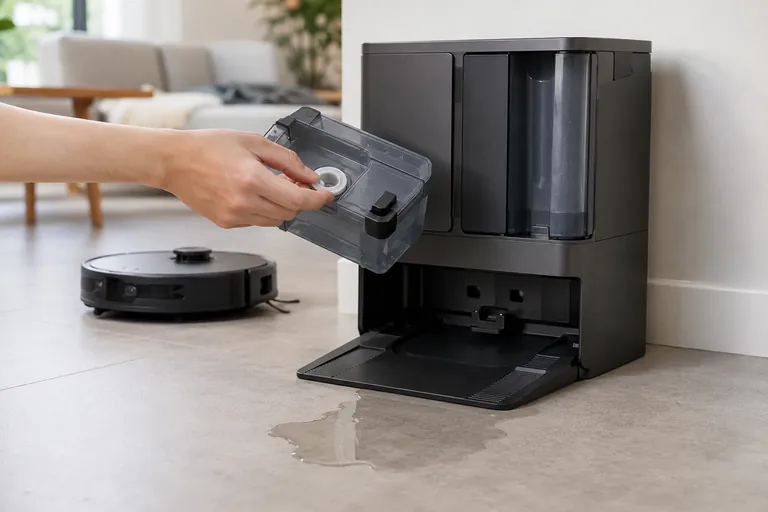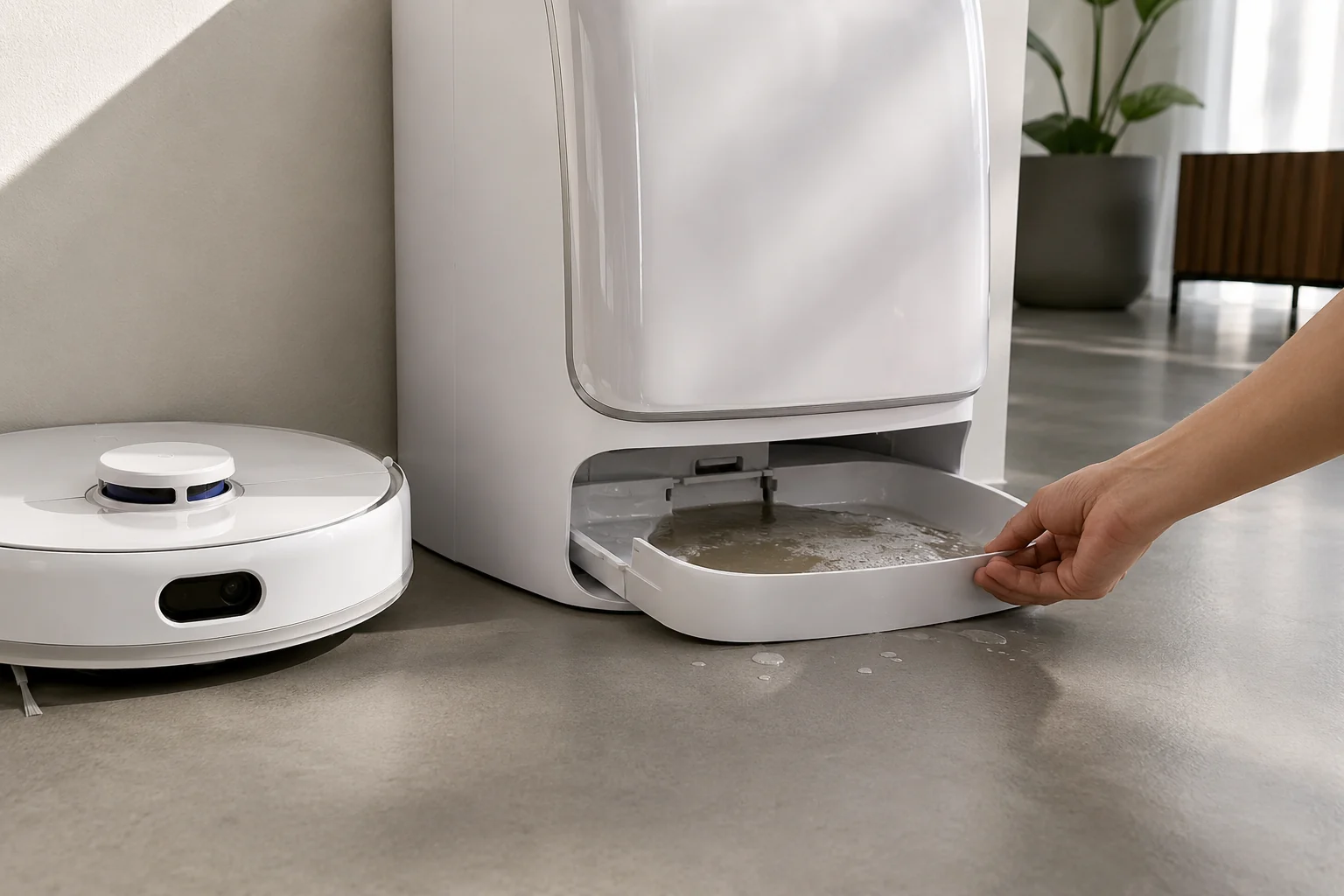
Narwal uses Error 2003 for a base-station overflow path, but its published steps use other Freo models as examples. First dry the removable tray and slope pad, then check the dirty-water lid click, both tank strips, and silicone seals. Restore Narwal-approved fluid. Run one wash only; if overflow returns, stop and contact support.
Narwal labels Error 2003 as base-station overflow. Its published spotlight uses another Freo model as an example, so follow only the shared removable-tray, tank, and seal checks and keep the model scope visible.
Inspect the water path from removable parts inward
| Observation | What it separates | Next action |
|---|---|---|
| Water remains after a wash | Tray or base still holds residue | Remove tray and slope pad; dry visible water |
| Tank lid lacks a firm click | Locking tabs may not be engaged | Reseat the dirty-water lid |
| Strip or silicone seal is loose | A visible seal is displaced | Return it to its groove or seat |
| Checks pass but overflow returns | Owner-visible causes are not confirmed | Stop cycles and contact Narwal |
Confirm the exact model and exact code, light pattern or symptom.
Run the lowest-risk physical or software check first.
Use each pass condition to decide what the result actually narrows down.
Confirm this is the right issue
- The Narwal app or station reports Error 2003 / Base Station Overflow.
- Water is standing in or spilling from the base/cleaning-tray area during or after mop washing.
- The dirty-water tank looks installed but the overflow alert keeps returning.
- A tank sealing strip or silicone seal may be loose or displaced.
- Third-party fragrance/detergent has been used in the clean-water tank.
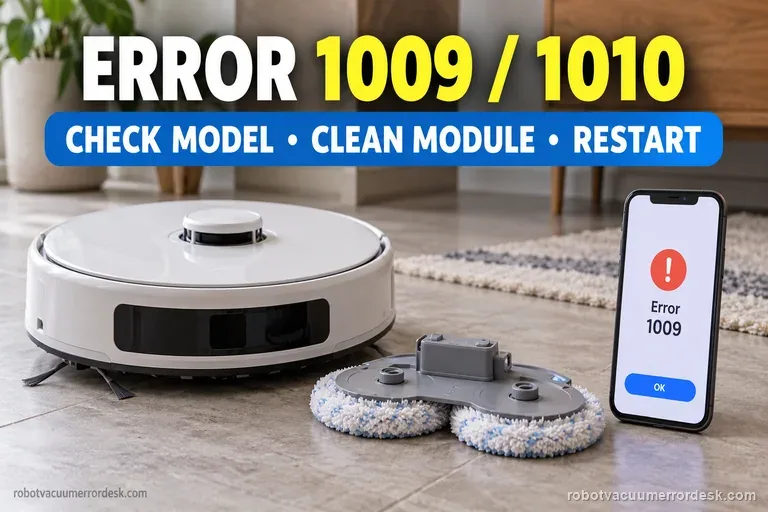
Keep Error 2003 separate from other water-system and pairing symptoms. Use the exact branch that matches the message on your Freo, or check the distinct roller-extension symptom on the X11: Narwal Error 1009 and 1010 · Roomba Max 705 Error 450 tank checks · ECOVACS X11 roller-mop extension checks
What’s most likely causing this
Residual water or debris in the base/cleaning tray
Dirty-water tank lid locking tabs not fully engaged
Loose sealing strip on the clean- or dirty-water tank
Loose silicone seal beneath either water tank
Unsupported third-party fragrance or detergent affecting the wet system
Internal pumping/drainage fault after all visible seals and tray checks pass
Reading your test result
| What you observe | What it narrows down | Next move |
|---|---|---|
| Free water/debris remains in the tray/base | The overflow condition may be sustained by standing water or a dirty drainage area. | Remove tray and slope pad, dry the base and clean the tray before testing another wash. |
| Dirty-water tank lid does not give a distinct click/feel | Narwal says the locking tabs are not proven fully engaged. | Reseat the lid until the locking tabs fully engage, then reinstall the tank. |
| Tank sealing strip or lower silicone seal is loose | The visible water path may no longer be sealed as designed. | Press the loose strip/seal back into its documented seating position and retest once. |
| Other-brand fragrance or detergent was added | Narwal explicitly identifies unsupported fluid as a variable in the Error 2003 path. | Return to the approved fluid setup before evaluating whether the overflow persists. |
| All visible checks pass but Error 2003 returns | The owner-serviceable causes in Narwal’s published spotlight no longer explain the overflow. | Stop repeated water cycles and contact Narwal with photos/video rather than opening the powered station. |
Use one dry baseline before retesting
The alert follows a recent tank removal
Illustrative example, not Narwal service data: Error 2003 appeared on 2 of the last 3 wash cycles after the dirty-water tank was removed. Dry the tray and slope pad, reseat the lid until it clicks, and check both tank strips and silicone seals. Run 1 controlled wash. If it passes, record 2 alerts in 3 prior cycles and 1 pass after reseating; that suggests a variable to monitor, not a proven cause or repair rate.
The same alert returns with seals seated
Illustrative example, not Narwal service data: the tray is dry, the lid clicks, and both tank seals sit correctly. One controlled wash reproduces Error 2003. Stop there instead of running a second wet test. Send 3 items to support: the exact alert and time, photos of the lid and seals, and a short video showing where fresh water appears. This records a repeat without claiming an internal cause.
Illustrative decision sequence. These are observations, not measured repair success rates.
- Dry removable tray and visible base
- Check lid, strips, and silicone seals
- Retest once; stop if overflow returns
Do not factory-reset by default. Use the exact model’s reboot/network-reset procedure only when the manufacturer path calls for it.
Work through these checks in order
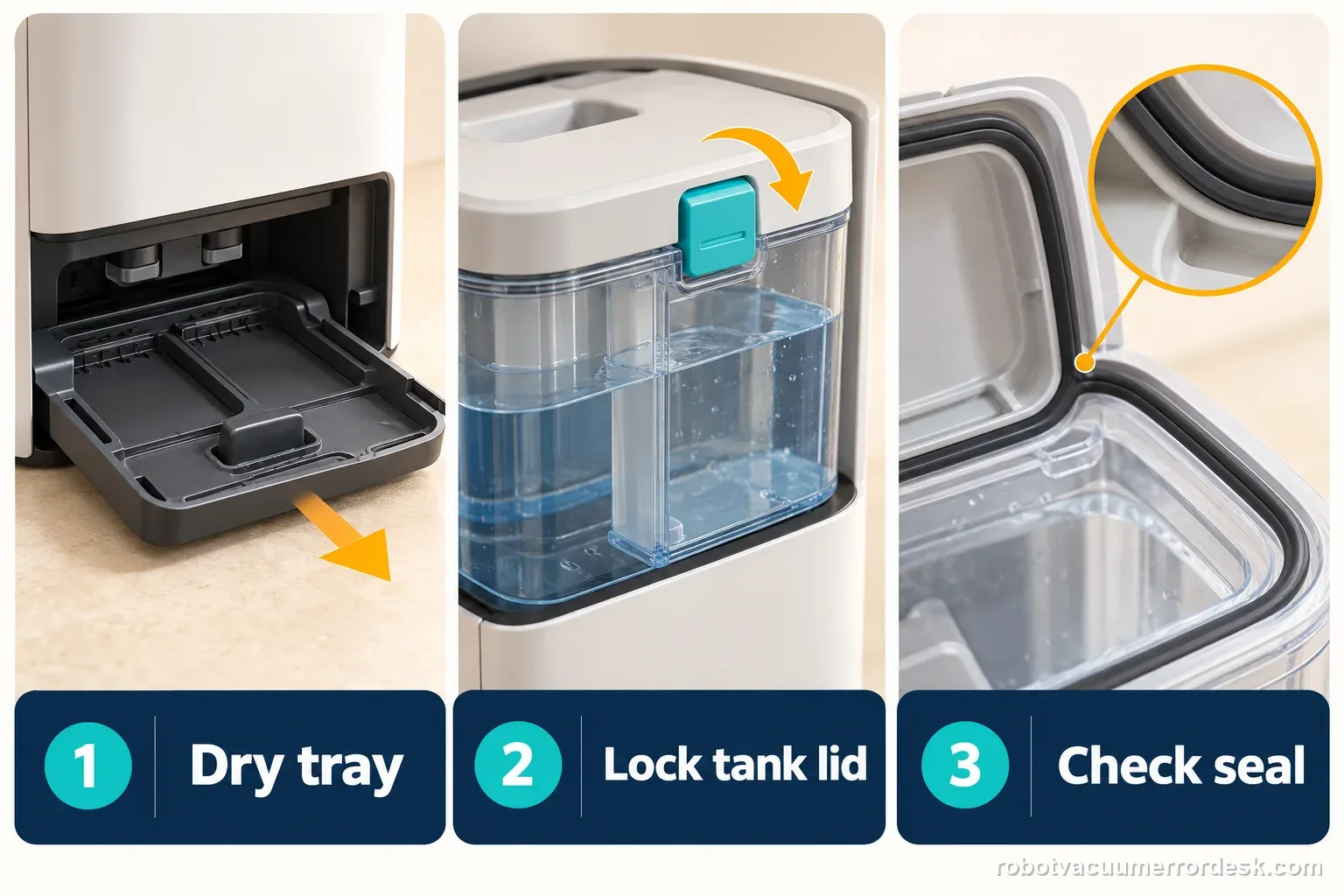
Remove the tray and slope pad, then dry the station
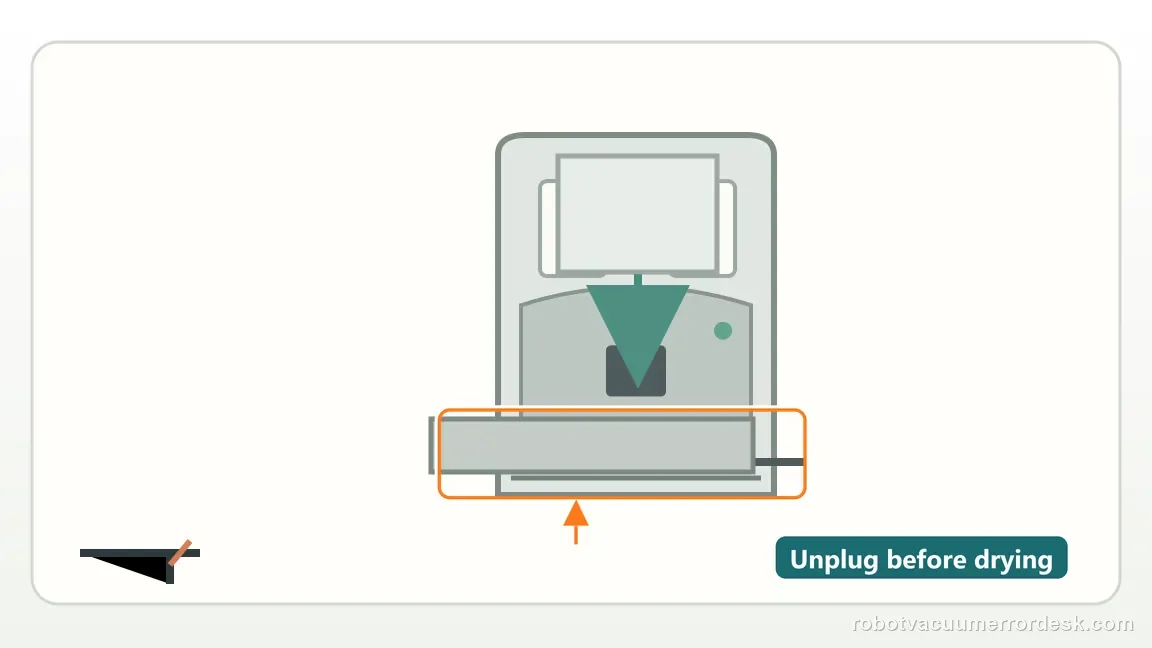
Narwal’s Error 2003 spotlight begins by removing the cleaning tray and base-station slope pad, then drying residual water. Power down and unplug the station before drying accessible surfaces. Note where water is concentrated so you can distinguish old residue from a fresh leak. Do not tilt, open or disassemble the base. The cited owner path stays with removable parts and visible tank seals.
Clean the cleaning tray and its drainage surfaces
Clean the removed tray thoroughly using Narwal’s tray-maintenance approach. Hair, sludge or residue around the tray/drainage area can obscure whether the station is actually evacuating wash water. Reinstall the clean tray only after the surrounding base area is also clean. The point is not cosmetic cleaning: it creates a controlled baseline so the following tank/seal checks are meaningful and a fresh overflow is not confused with leftover dirty water.
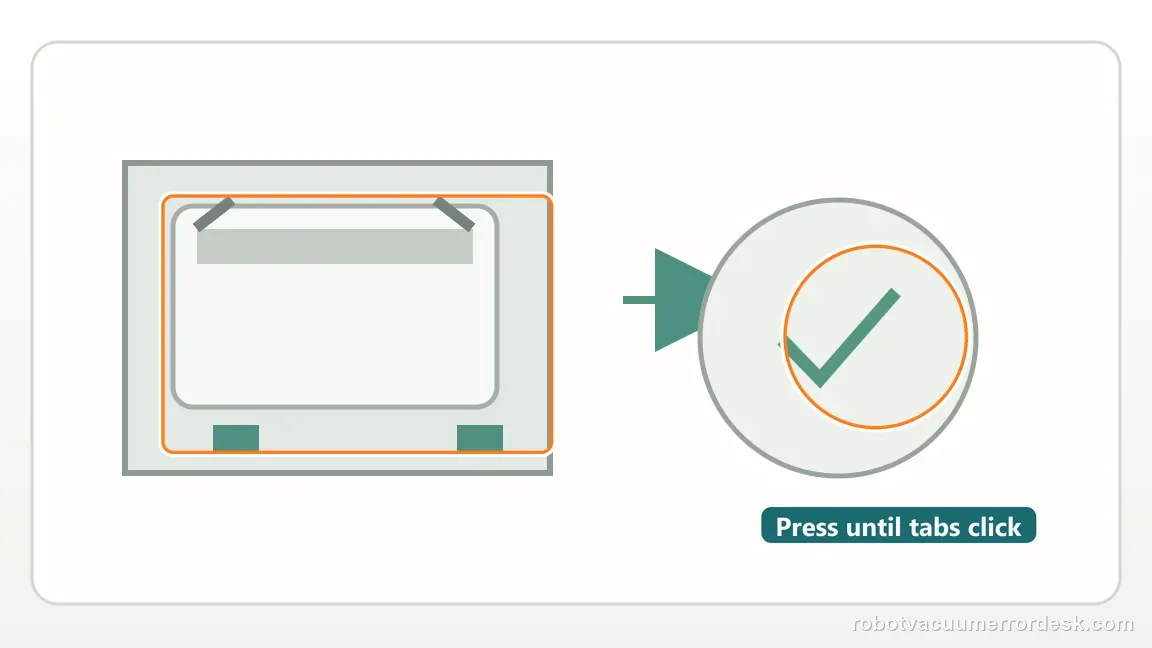
Prove the dirty-water tank lid is actually locked
Remove the dirty-water tank and reseat its lid. Narwal is unusually specific here: the locking tabs must be fully engaged, with a distinct click that should be heard and felt when pressing the wastewater-tank lid into place. A lid that merely looks flat is not enough evidence. Check both tabs and then reinstall the tank squarely in the base. If you cannot achieve the documented lock, record that mechanical problem instead of forcing repeated wash cycles.
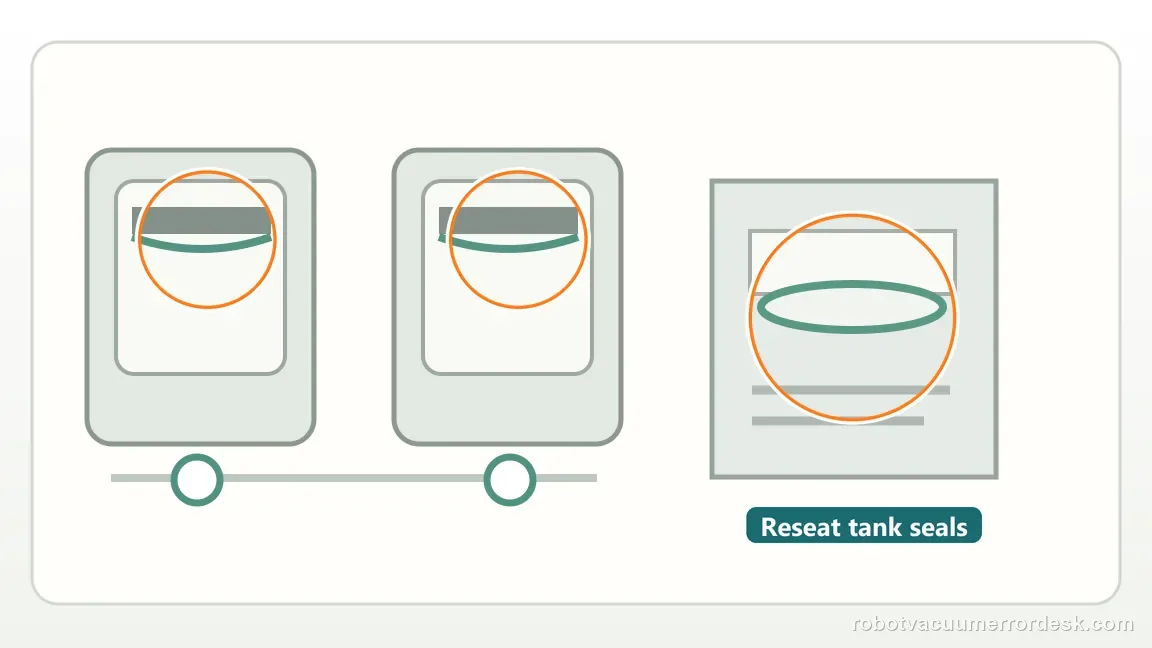
Inspect tank sealing strips and lower silicone seals
Check the sealing strips on both the clean-water and dirty-water tanks. If a strip has lifted out of its groove, Narwal instructs pressing it back into the sealing groove. Then lift both tanks and inspect the silicone seals beneath them; reseat any loose silicone seal into position. Work only on these visible/removable seals. Do not add grease, adhesive or improvised gasket material, because that changes the manufacturer’s wet-system geometry and can make a later support evaluation harder.
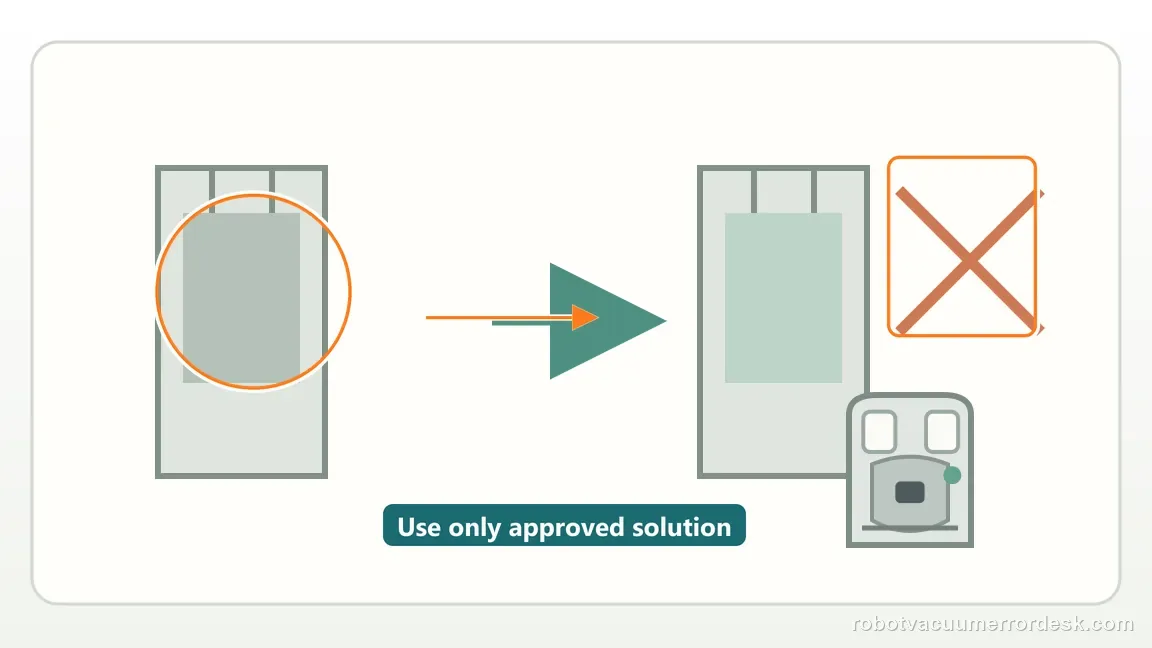
Remove detergent as a variable and run one controlled test
Narwal’s Error 2003 article tells owners to confirm whether any other-brand fragrance or cleaning detergent was added to the clean-water tank and says that use is not allowed in this troubleshooting path. Return to the approved fluid setup, then run one controlled wash only after the station, tray, lid and seals pass inspection. Watch for where water first appears. If Error 2003 or overflow returns, stop repeating wash cycles that can spill additional water and preserve a short video for support.
If the Freo app also shows a numbered alert, match the complete message and exact model in the Narwal error-code index before following a code-specific step.
Escalate if Error 2003 returns after the base/tray is dry and clean, the dirty-water lid locks with the documented click, tank sealing strips and lower silicone seals are secure, and the clean-water tank is not using other-brand fragrance/detergent. Stop repeated wash cycles that could release more water. Send Narwal photos of the tray, tank lids/strips, silicone seals and a video showing where fresh overflow begins.
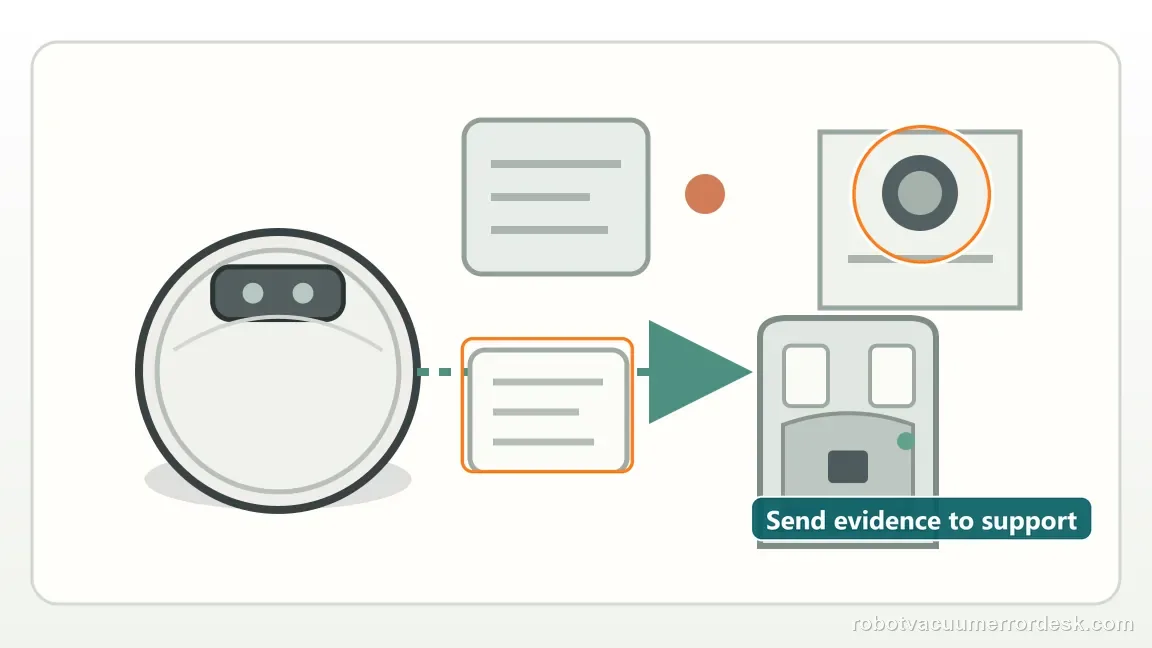
Record each visible Error 2003 check
| Stage | Question to answer | Evidence to keep |
|---|---|---|
| Base | Tray and slope pad dry? | Before-test photo |
| Dirty tank | Lid clicks into place? | Lid and latch photo |
| Seals | Strips and silicone seated? | Close-up of each tank |
| Fluid | Other-brand additive used? | Product name if relevant |
Before you contact support, gather this
A reproducible case moves a support call past the basic troubleshooting script faster than “it doesn’t work” does, and it keeps the clues from your own tests on record.
- Exact model name and the error code / voice prompt exactly as shown
- A photo or screenshot of the app error and the time it occurred
- A short list of the checks already completed and what happened after each one
- Map screenshots and robot location when the problem involves localization, zones or docking
Where this comes from
Narwal Error 2003: Base Station Overflow
Narwal’s Error 2003 spotlight is manufacturer-wide and demonstrates the flow with other Freo models rather than publishing a Freo Z Ultra-specific bulletin. It documents removing and drying the tray and slope pad, cleaning the tray, engaging dirty-water lid locking tabs until a distinct click, reseating loose tank sealing strips and lower silicone seals, and excluding other-brand fragrance/detergent. The exact-model manual confirms the Freo Z Ultra parts named here, but does not publish an Error 2003-specific repair.
Additional official source: Narwal: Base Station for Vacuums Comprehensive Troubleshooting Guide ↗Additional official source: Narwal: Error Code Index and Resolution ↗Additional official source: Narwal Freo Z Ultra User Manual ↗Last editorial review: September 5, 2026Regional note: manufacturer help centers, model suffixes, mains-power requirements and warranty procedures can differ by country. If the source redirects to a local support site, confirm that the model/hardware scope still matches before following a region-sensitive step.
This guide is rated Manufacturer-general. See what each evidence label means →
Questions people ask
Is Narwal’s Error 2003 article specific to Freo Z Ultra?
No. Narwal publishes Error 2003 as a manufacturer-wide base-station overflow path and illustrates it with other Freo models rather than a Freo Z Ultra-only bulletin. This guide therefore keeps the evidence scope at Manufacturer-general and uses only the visible owner-level checks Narwal documents: tray drying, tank-lid locking, seal seating and approved fluid setup.
Which seals should I check for Error 2003?
Narwal’s Error 2003 spotlight calls out sealing strips on both the clean-water and dirty-water tanks, plus the silicone seals beneath both tanks. Reseat only a visible strip or silicone seal that is loose or displaced. Do not add adhesive, grease or improvised gasket material, and do not open the powered base to inspect internal plumbing.
Why does detergent matter for a Narwal base-overflow code?
Narwal explicitly asks whether another brand of fragrance or cleaning detergent was added to the clean-water tank and says that use is not allowed in this troubleshooting path. Unsupported fluid can therefore remain a meaningful variable while diagnosing Error 2003. Return to the approved fluid setup before judging whether the tray, tank seals or internal wet system are still at fault.
Should I keep running mop-wash cycles to see where the leak starts?
Run only one controlled test after the tray, tank lid and visible seals pass inspection. If Error 2003 or fresh overflow returns, stop repeating wet cycles that can release more water. A short video showing where new water first appears is more useful for support than repeated flooding, especially after the published owner-level checks have already been completed.
When should I stop troubleshooting Error 2003 at home?
Stop when the base and tray are clean and dry, the dirty-water lid gives the documented positive lock, tank sealing strips and lower silicone seals are seated, the approved fluid setup is restored, and one controlled wash still reproduces Error 2003. At that point preserve photos and video and contact Narwal rather than opening the powered wet base.
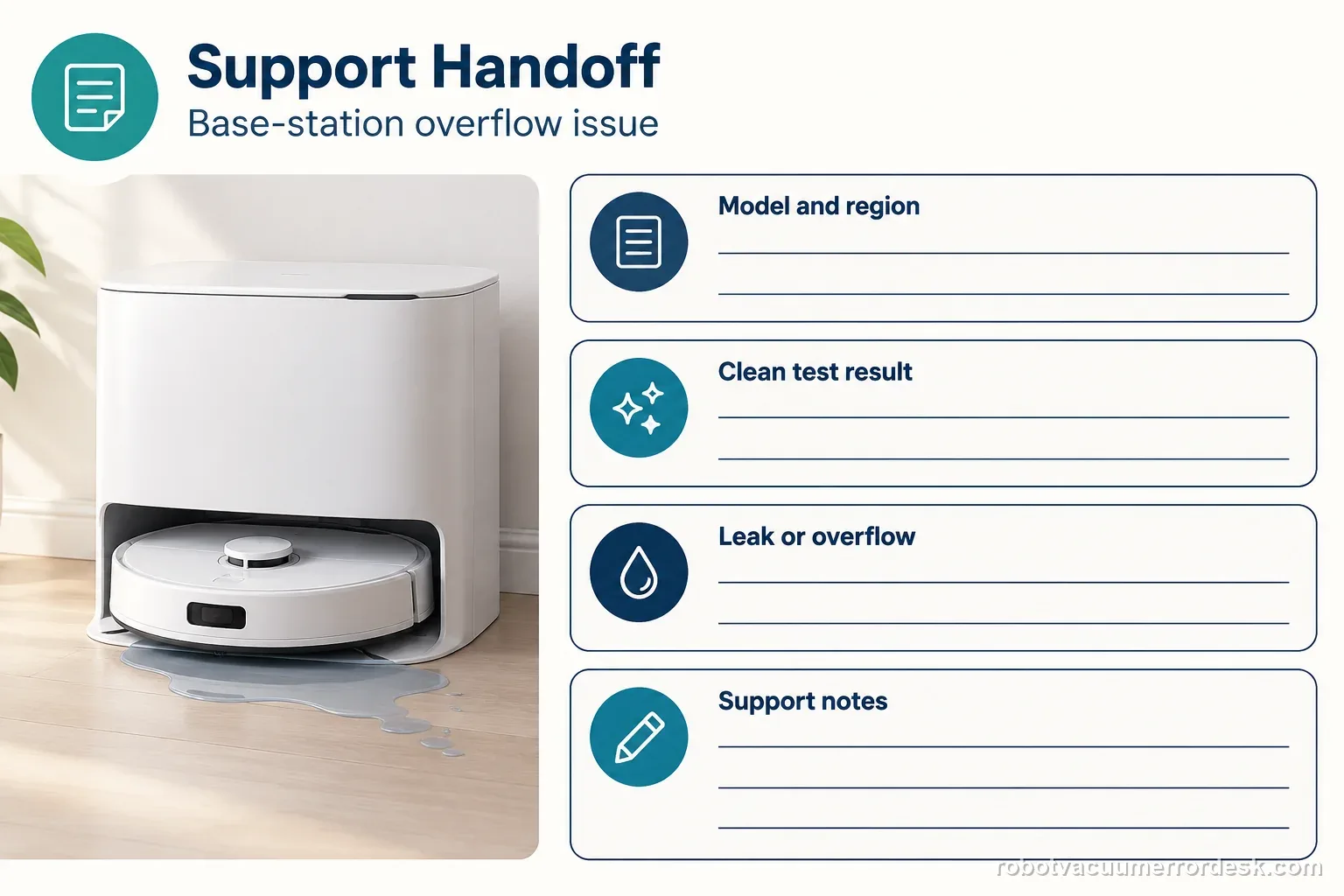
Narwal's Error 2003 article does not establish a Freo Z Ultra-specific internal repair. Keep the checks at removable owner-serviceable parts. Do not open or tilt a powered station; send photos and the exact model if the overflow repeats.
Choose the matching model before using another guide's procedure:
Freo Z Ultra map issue: navigation branch →Freo Z Ultra Wi-Fi setup checks →Narwal Flow base noise: separate symptom →Freo Z Ultra Error 1011: localization issue →Did this diagnostic narrow the fault?
Use this as an editorial signal, not a popularity counter. If a feedback address is configured you can email the note; otherwise you can copy it for your own support record.